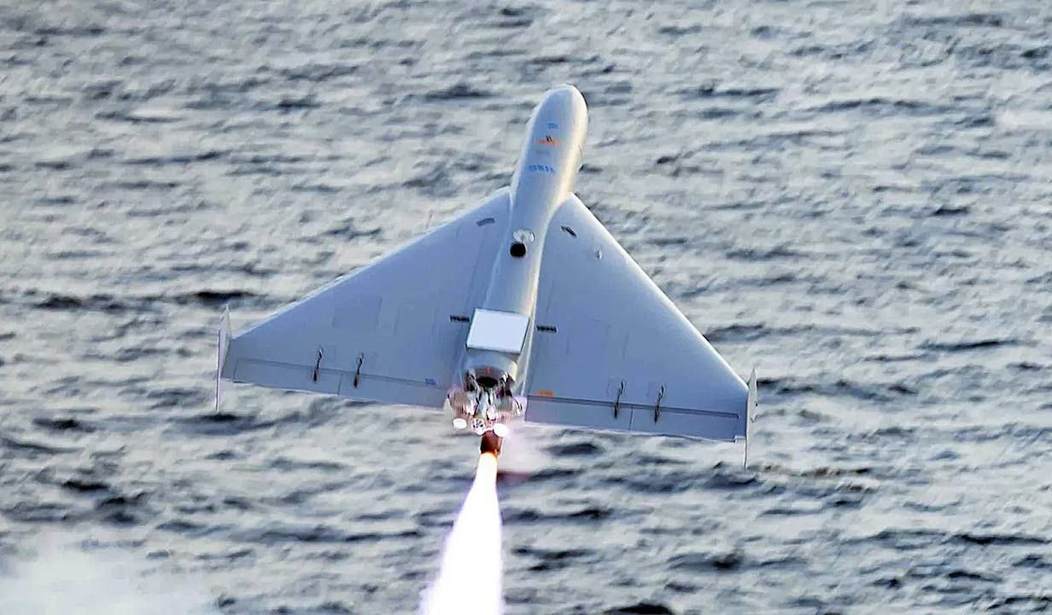
A new round of tit-for-tat strikes has happened in and around the Strait of Hormuz today, beginning with an Iranian drone attack on a Singapore-registered container ship in the Strait of Hormuz, again trying to assert control over maritime transits in the Strait. Subsequently, Iran struck a tanker transiting the gulf.
Singapore, as littoral state of the Straits of Malacca and Singapore has been staunch in its defence of freedom of navigation in the Strait of Hormuz and a refusal to negotiate with the Iranians on tolls or passage of the waterway.
The MPA said the Ever Lovely was proceeding on its voyage and all 21 crew safe. “MPA will continue to remain in close contact with the vessel's management company and provide the necessary assistance.”
The attack on the Ever Lovely led to the suspension of a scheme launched by the International Maritime Organization (IMO) to evacuate ships that have been stranded in the Gulf since 28 February. The Evergreen vessel was not sailing through Hormuz as part of the IMO initiative.
Following the attack Iran's Persian Gulf Strait Authority (PGSA) posted on X: "Any passage through routes outside the framework designated by PGSA will not be covered by safe passage guarantees and will not be entitled to insurance coverage or related liabilities. The consequences arising from passage through unauthorised routes shall be the responsibility of the owner, operator, and vessel commander."
We all know these Evergreen-type container ships, and apparently, no serious damage was done as the ship continued on its way.
Subsequently, Iran struck a tanker transiting the Strait.
In response, CENTCOM conducted what were described as extensive strikes in the same region as our recent retaliatory strikes, aimed at degrading Iran's striking ability and mine-laying capabilities.
— U.S. Central Command (@CENTCOM) June 27, 2026
U.S. Forces Conduct Additional Strikes After Iran’s Latest Commercial Ship Attack
TAMPA, Fla. — U.S. Central Command (CENTCOM) forces conducted additional strikes against multiple targets in Iran, June 27, at the Commander in Chief’s direction.
After yesterday’s U.S. strikes in response to the Iranian attack on M/V Ever Lovely, Iran was given a chance to honor the ceasefire agreement but elected not to when its forces launched a one-way attack drone that hit M/T Kiku this morning at 4:30 a.m. ET. The Panama-flagged tanker was transiting near the Strait of Hormuz with more than two-million barrels of crude oil.
CENTCOM forces launched strikes today in direct response to continued Iranian aggression against commercial shipping. U.S. military aircraft targeted Iranian military surveillance infrastructure, communication systems, air defense sites, drone storage facilities, and minelayer capabilities.
Commercial vessel transits through the Strait of Hormuz continue. U.S. forces remain vigilant, lethal, and ready.
President Trump expressed his displeasure not just kinetically, but with new jibes and threats aimed at Iran.
U.S. President Donald Trump:
— Open Source Intel (@Osint613) June 27, 2026
"United States aircraft just struck Iranian missile and drone storage locations, and coastal radar sites, for violating the Cease Fire Agreement, AGAIN! It is very possible that they will never learn! There may come a point when we are no longer able… pic.twitter.com/FPQqbKVlI6
U.S. President Donald Trump:
"United States aircraft just struck Iranian missile and drone storage locations, and coastal radar sites, for violating the Cease Fire Agreement, AGAIN! It is very possible that they will never learn! There may come a point when we are no longer able to be reasonable, and will be forced to militarily complete the job that we very successfully started. If that happens, the Islamic Republic of Iran will no longer exist! President DJT".
A cynic, given the past few months of relative inaction, might assume that this is just bluster, and perhaps it is. But there are indications that a genuine return to hostilities might be on the horizon, and those indications have as much to do with the action in Lebanon as with the happenings in the Strait.
The Lebanese government dismantled the pro-Iran signs along the road to Beirut airport. No more "Thank you, loyal Iran" billboards. Now it is "Lebanon first." pic.twitter.com/lNb0A4HcEw
— Joe Truzman (@JoeTruzman) June 27, 2026
Israel and Lebanon signed a peace deal, with both countries promising to work together to defang Hezbollah. Hezbollah, in turn, whipped up riots in Lebanon and threatened the Lebanese regime. Israel's response was not directed so much at Hezbollah, which is an Iranian proxy, but at Iran itself.
🚨Breaking - Following the signing of the Israel-Lebanon framework agreement, Israeli Defense Minister Israel Katz warns Iran:
— גיא עזריאל Guy Azriel (@GuyAz) June 27, 2026
“If Iran attempts to attack Israel in order to prevent the implementation of the agreement, we will respond with overwhelming force and demonstrate the… pic.twitter.com/LL2Gw1jtd0
🚨Breaking - Following the signing of the Israel-Lebanon framework agreement, Israeli Defense Minister Israel Katz warns Iran:
“If Iran attempts to attack Israel in order to prevent the implementation of the agreement, we will respond with overwhelming force and demonstrate the existing gap in power between us.”
Katz also said the agreement delivers a “strategic blow” to Iran’s axis, stressing that Israel will remain in its security zone in southern Lebanon and will not withdraw until Hezbollah is fully disarmed across Lebanon.
Implicitly, at least, a new axis of power has been created between Israel and Lebanon, and that may change the equation. Or not. All the players are acting as if it does.
Hey Parsi’s name seems familiar, does he run a big NGO while having been found in court for collaborating with Iran officials or anything like that
— DataRepublican (small r) (@DataRepublican) June 28, 2026
On the other hand, Iran has made clear that total control over transits in the Strait of Hormuz is a red line for them, as it represents their main, if not only, strategic advantage. They have made clear that they own the Strait and all transits must be approved by them.
Khamenei's office says global energy security is now inseparable from Iran's national security. An editorial in "Voice of Iran," the Supreme Leader's office publication, declares the Strait of Hormuz a permanent part of Iranian deterrence - a geopolitical asset that "cannot be… pic.twitter.com/7XVMgOu6IK
— Open Source Intel (@Osint613) June 27, 2026
Khamenei's office says global energy security is now inseparable from Iran's national security. An editorial in "Voice of Iran," the Supreme Leader's office publication, declares the Strait of Hormuz a permanent part of Iranian deterrence - a geopolitical asset that "cannot be handed over, traded, or ignored."
The piece claims the balance of power in the strait shifted permanently after the Forty Days War and that Iran must never retreat from active management of the waterway. Any threat to Iran's security, it warns, will affect vital regional shipping routes.
We are all wondering the obvious: why and how did we allow Iran to place these assets in the region since the end of hostilities?
Jennifer Griffin of Fox didn't just wonder, but asked the Pentagon.
I asked a senior defense official why the US has had to go back and restrike these sites that have been hit multiple times since February 28 when the war began. I was told Iran has reconstituted its air defense and missile systems along the Strait of Hormuz since the US bombing…
— Jennifer Griffin (@JenGriffinFNC) June 27, 2026
I asked a senior defense official why the US has had to go back and restrike these sites that have been hit multiple times since February 28 when the war began. I was told Iran has reconstituted its air defense and missile systems along the Strait of Hormuz since the US bombing campaign ended on April 7.
That, the source said, is why the US military is now having to restrike areas like Qeshm Island and Sirik which they had struck in the past.
“In the time since the cease fire on 7 April, Iran has reconstituted — thus the targets around the Strait of Hormuz,” a senior US defense official tells me. “There is a LOT that is damaged… a LOT… but they moved things around.”
It’s been 10 weeks since the April ceasefire was announced.
President Trump obviously believes that the tit-for-tat strikes are part of the way Iran negotiates, testing our resolve without going straight to an outright resumption of hostilities. If we take him at his word, his calibrated responses are measured to hit Iran harder, showing our resolve, without resorting to full-scale war ourselves.
It seems like something out of Herman Kahn's game theory, which informed nuclear strategy during the Cold War, which is perhaps apt. Anybody who followed Strategic Studies during the Cold War can recognize the pattern, which was based on controlling nuclear escalation and avoiding all-out nuclear war.
U.S. Navy and Air Force fighter jets conducted strikes tonight on 10 Iranian military targets at multiple locations in and near the Strait of Hormuz for Iran's drone attack on M/T Kiku. pic.twitter.com/Z0TLZRqmF6
— U.S. Central Command (@CENTCOM) June 28, 2026
I have to say, a lot of it went over my head, seeming to be the realm of mathematicians and modelers. I was never convinced that the real-world confrontations would play out as they do on game boards and in computers, but thankfully, they were never seriously tested to a conclusion.
Game theory is implicitly based on everybody playing the same game with the same set of rules and values for outcomes; whether that is the case here is doubtful, although it is also doubtful that we have good insight into the risk tolerance of Iran's leaders or their pain tolerance. Presumably, it is not infinite, and certainly ours is not. The Iranians are betting that their pain tolerance is much, much higher than ours, and so far they have been right.
Whether that remains the case has yet to be seen. Trump is certainly not acting as if his patience is infinite and that he is totally defeated regarding control over the Strait of Hormuz. It seems to be a red line for him as well.
One variable to note: Iran's strikes really HAVE been very limited and calibrated. They have destroyed no ship, nor, apparently, damaged them seriously. It's clear that they are not eager to risk an all-out retaliatory attack. This no doubt informs our responses and President Trump's confidence in not holding back much in his strikes. We are, it seems, doing far more damage to them with each retaliatory strike than they did to the ships.
Iran could, one assumes, not just hit but sink these ships, or at least render them inoperable. One wonders whether the drones are even armed with explosives, given the limited damage. That, in itself, is meant as a signal.
No doubt there will be more of interest to come.
UPDATES:
Yes, there is more of interest: Iran is attacking Bahrain.
Iranian forces are attacking Bahrain in response to the overnight American airstrikes. Isa Air Base has reportedly been targeted. pic.twitter.com/eKMzUJsSvn
— OSINTtechnical (@Osinttechnical) June 27, 2026
Following the recent Iranian drone and missile attacks on Kuwait and Bahrain, the IRGC has said that 8 U.S. military infrastructure sites were targeted in a combined drone and missile strike by the IRGC Navy and Aerospace Forces. pic.twitter.com/I3YudsQ3Pt
— OSINTdefender (@sentdefender) June 28, 2026
The attacks were directed at US bases located in those countries, and Iran is now saying that it will escalate attacks on shipping in the Strait of Hormuz and halt negotiations.
BREAKING: Iran's IRGC announces it launched ballistic missiles and drones at eight US military targets, striking the US Fifth Fleet at Salman Port in Bahrain and the Ali Al Salem Base in Kuwait, "destroying them and decisively responding to recent US aggressions," per Tasnim.…
— The Hormuz Letter (@HormuzLetter) June 28, 2026
Whether that means negotiations will indeed halt behind the scenes isn't at all clear, given that both sides release statements in public that often do not match what happens behind the scenes. Shocking, I know. It could be real, or not. It depends on variables we don't really have insight into.
And tanks are rolling in Baghdad as Iraqis arrest anti-regime politicians.
#BREAKING Gunfire has been reported in the Green Zone in central Baghdad, the Iraqi capital. pic.twitter.com/0F17j0gNPG
— Global OSINT (@GlobalOSINTHQ) June 28, 2026
Editor's Note: Do you enjoy HotAir's conservative reporting that takes on the radical left and woke media? Support our work so that we can continue to bring you the truth.
Join HotAir VIP and use promo code FIGHT to receive 60% off your membership.









Join the conversation as a VIP Member