






I was an avid reader of Larry Niven's science fiction as a young man, and his most famous works took place in his "Known Space" series, which spanned about a millennium of future history.
It was fun, thought-provoking (if now a bit dated, as today's technology changes will affect the potential technologies of the future), and embodied an interesting balance of optimism about the future and cynicism about human nature. They are very readable books.
One of the key themes that pervades the earlier years of the Known Space timeline was the human obsession with extending lifespan, and the sociological implications that stem from that. One of which is that before drugs could be developed to extend lifespans to centuries, the need for replacement organs would be voracious. And the source for such organs would, of course, be fellow humans.
The result? Killing other humans to get their organs is the obvious answer. There is so much there to harvest, and all you need is a good excuse to take them in order to "civilize" the process, right? In his world, the natural step was an increasing range of crimes that call for the death penalty, which helps fill out the organ banks.
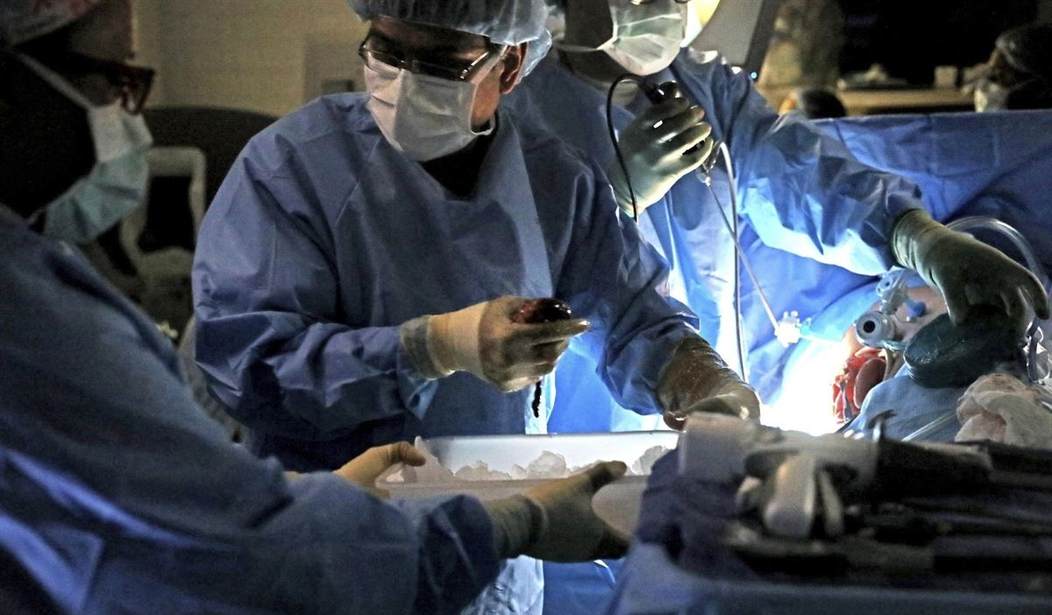
Luckily, we aren't there yet, and sometime soon we may be able to 3-D print organs (cross your fingers!), but for now the need for organs is growing, and with MAiD, a new source has presented itself. Now all you need to do to make the process perfect is get rid of the "Dead Donor Rule," which requires that people not be killed for their organs.
Some spoil if you wait too long, and there is a human body just ripe for harvesting, right?
The legalization of assisted suicide/euthanasia corrupts medical ethics and not just because killing patients or assisting their suicides is a direct violation of the Hippocratic oath. No: Transforming sick and disabled people into a killable caste also objectifies them as potential natural resources to be mined or harvested.
Hastened death and organ-harvesting have already been conjoined in Canada, Australia, New Zealand, Spain, the Netherlands, and Belgium. (In the latter two countries, some cases have involved mentally ill patients.) The practice has been supported in prominent medical journals. It is not alarmism to note that the idea is gaining ever wider acceptance among the medical and bioethics intelligentsia.
But killing and then harvesting doesn’t go far enough for some mainstream bioethicists. Where euthanasia is legal, they don’t see why organ procurement can’t also be the means of death for patients who want to donate. In other words, don’t just kill and then harvest; harvest to kill.
I've written about proposals to do this previously, but I want to point you to Wesley Smith's essay in Science and Culture as well.
As the practice of MAiD has expanded to perfectly healthy people who have just decided to die, including people with PTSD, mental health problems, and even simply those who are poor, medical "ethicists" are trying to move the boundary for what is acceptable to do with people who have "consented" to die.
If they want to die, can't we help them out through surgery to remove their organs while they are still alive? It is so much more efficient, you know, and ensures a better class of organs.
And better yet, you can identify patients into whom you can transplant even before you perform the surgery to harvest the organs, ensuring the fastest possible transplantation process.
And, to be sure, they have a point, as all people who travel down the slippery slope do. If this, why not that?
Why not indeed? It's the same way we got to killing people who would normally be referred to a suicide hotline, which, if you think about it, isn't efficient at all. They want to die; we want to kill them. What's the problem? Therapy costs money. Let's kill off the aged, the infirm, the unhappy, the people who would drain our medical systems of much-needed resources.
We can mine the depressed!
...a 16-year-old Belgian girl with brain cancer asked to be killed in part so that her organs could be harvested. She was put into a 36-hour coma — not for her medical benefit but to conduct needed tissue tests and find suitable recipients. The bioethicists claim that respect for patient autonomy should permit killing for organs:
Although death by organ donation may be viewed as a departure from the DDR, shifting focus away from the temporal relationship to death determination, we interpret it as consistent with a historical pattern of recontextualization. In the setting of regulated voluntary euthanasia and organ donation after euthanasia, death by organ donation warrants open, transparent dialogue. Since patients requesting voluntary euthanasia can provide first-person consent and articulate their values, that option might offer a unique opportunity to respect their autonomous wishes by integrating donation into their end-of-life planning.
Well, good. We all approve of open, transparent dialogue. Except if it interferes with forwarding a Narrative™, as we have seen in recent years during the COVID pandemic, when "open, transparent dialogue" was inconvenient. Perhaps it might when the stakes are a body brimming with usable organs, too.
After all, if someone really wants to die, who are we to interfere with his or her “autonomous wishes” by setting parameters on what kind of suffering qualifies for death by organ donation? Besides, killing for organs would result in a better product:
Death by organ donation would enable cardiac donation, typically prohibited with DCD, and improve recipient outcomes by reducing warm ischemia time, thereby lowering primary graft-dysfunction rates to levels similar to those achieved with donation after brain death. In addition, it might substantially increase the donor pool, potentially saving many lives. Since death would be a chosen and inevitable outcome in these cases, enabling retrieval under ideal conditions represents a Pareto improvement: no one would be made worse off, and multiple lives might be saved.
It's so easy to see how one gets from here to there. Once you redefine what "do no harm" means, you can make it mean anything you like.
Sort of like redefining what a woman is, come to think of it. Once you twist moral reasoning a bit, you can twist it beyond all recognition with so little effort that the evil can be made to look good.
Slippery slopes are very real.
Editor's Note: Do you enjoy HotAir's conservative reporting that takes on the radical left and woke media? Support our work so that we can continue to bring you the truth.
Join HotAir VIP and use promo code FIGHT to receive 60% off your membership.


Join the Conversation
VIP members get the ability to comment on articles.