






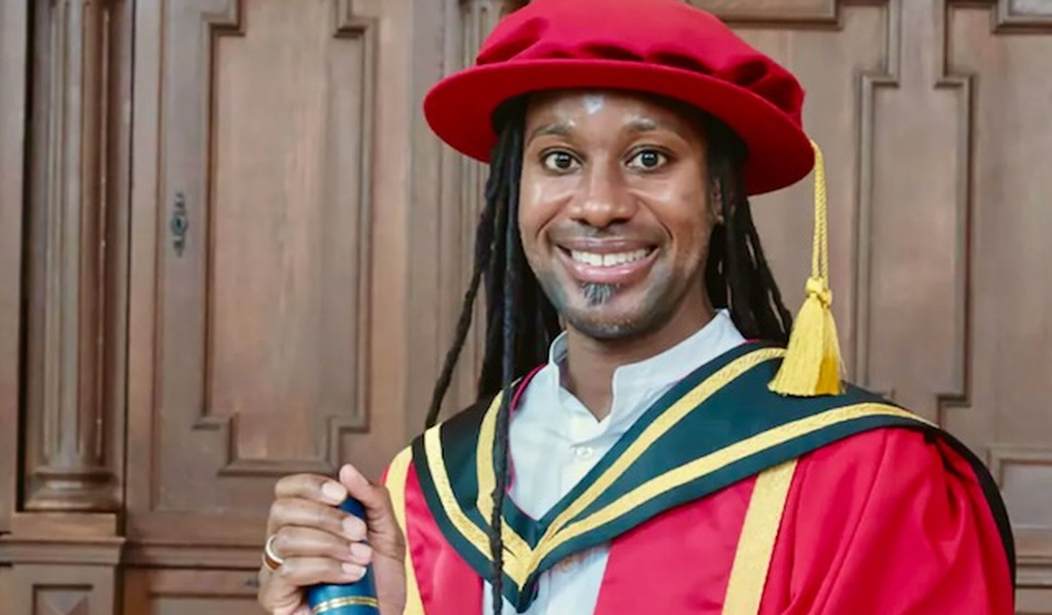
You would think, given how stupid some people are, that they would have difficulty breathing. After all, it's clear their brains are broken.
But God, being merciful, ensured that our autonomic functions are controlled unconsciously, so that even lefty academics are able to breathe normally despite being otherwise brain-dead.
I am reliably informed that there are sociologists who are not, in fact, brain-dead lefties, although I have yet to meet one, and this article in The Guardian from a black sociologist in Britain doesn't give me hope that I will anytime soon. It's too bad, because the discipline ought to be very interesting, and a cohort of honest scholars focused on studying how societies work would be very useful to have, just as having black academics such as Tyler Austin Harper who are not race-obsessed would make for a healthier academia and society.
Hirsch’s piece in the Guardian - https://t.co/TVDvurBnJD
— James Martin Charlton (@jmc_fire) August 13, 2026
An extraordinary paragraph from Afua Hirsch in which she admits that many black sociologists and she herself had doubts about Arday but sat on them because “he would be unlikely to be treated fairly and we would all be damaged in the process.” Did they not consider that students were doubtlessly being damaged and - when it eventually came out - so would sociology and the reputation of black academics? It seems second and third order consequences weren’t their strong points.
Unfortunately, Afua Hirsch's piece in The Guardian confirms what most of us already pretty much believed: everybody knew that Jason Arday was a fraud, and everybody kept his mouth shut because it would reflect badly on academia and on themselves, and would give aid and comfort to people who oppose DEI.
Rather than using the incident of Arday's public collapse as a moment of reflection and correction, Hirsch warns darkly that Arday's exposure is a dangerous moment because the racists (anybody who believes in honesty, integrity, and equality) now have a weapon to make the case that academic standards for blacks and others should be the same.
In other words, we must defend liberal racism, so damn the torpedoes, full speed ahead!
Maybe it’s just my algorithm, but social media seems flooded with hot takes on Jason Arday. I have worked with him – we were developing a project together at one point – and I have thought a lot about him in the years since.
The fact is that many of Arday’s black peers in academic sociology have been voicing concerns about him for a while. He seemed, to them, to have come out of nowhere. His performance at high-profile academic events did not match the credentials that were being touted. I have had various conversations with sociology professors in which this has been the main topic of conversation, and their questions began to mount into a list. They did not voice them publicly because we all know that whatever the truth or the outcome, he would be unlikely to be treated fairly and we would all be damaged in the process. As for me, I was an interested observer to allegations the veracity of which I couldn’t personally verify. But hearing them from fellow black academics I respect was enough to put me on alert and raise a red flag for anyone who asked me whether publicly supporting him was a good idea.
Some of the people who did sign those letters are now feeling very angry that Arday did not protect them from what he must have known to be lies before they used their own reputations to defend his. Others are angry that he appears to be using his neurodivergence as an excuse for dishonesty, which of course it’s not.
The media cannot conceal its excitement about his transgressions. Arday doesn’t need to be a fantasist to be the kind of man commentators would rather not see at a university like Cambridge – being black is enough. For them, the fact that he made stuff up is simply a massive bonus. Which explains why they have moved so quickly from identifying mistakes he has made to indulging in an orgy of delight at the prospect of smearing all black academics.
Hirsch's piece drips with racism, essentially arguing that Jason Arday is being treated unfairly because he is black. She agrees that he is a fabulist and that he never deserved the adulation heaped on him. She decries the damage this incident has caused.
But, in the end, she sees it all in the context of anti-black racism, and justifies other black academics going along with the charade that was, admittedly, orchestrated by the woke lefties at Cambridge and all the other academic institutions.
What really stuck out for me was this obviously false assertion she made:
What I do have to say about Jason Arday is really very simple. The overwhelmingly white dons and administrators at Cambridge chose one academic – unrecognised by many of his black peers in the field – and felt his was an appointment with which they could feel comfortable. This resembles a pattern we see elsewhere in public life, where the disproportionately few black people who are selected by white gatekeepers are sometimes chosen for reasons that seem to have little legitimacy among black peers.
Black academics, and black people in general, have never and – it’s my confident prediction – will never demand the right to plagiarise, lie or fabricate our credentials. What we have been demanding is to be treated equally. To be appointed to the levels commensurate with our actual credentials, to have our work taken seriously by intellectual peers, and to be paid fairly and on equal terms for our labour. To not have opportunities taken away because of our race. To have our work, performance and legacy held to the same standards as everyone else’s.
We are very far from anything resembling this. You don’t need a Cambridge degree to see how conveniently the Arday story is serving as a distraction while the media drags us even further in the wrong direction.
This is patently false. Ask Claudine Gay. Ask any group of black activists who demand numerical equality in academic appointments. Look at all the academics, including the overwhelming number of "BIPOC" academics who jump up and defend every accused plagiarist and fabulist when they are caught committing fraud.
LINK: Fallen Cambridge Star Jason Arday’s ‘True Life’ Memoir Appears To Poach Life Events From His Favorite Soap Operas, ‘Spartacus’ and ‘Forrest Gump’https://t.co/4YCIBTP9lz
— Benjamin Ryan (@benryanwriter) August 13, 2026
I report: A @FreeBeacon review of Arday’s memoir, out this week from Simon & Schuster, shows that his…
Fallen Cambridge Star Jason Arday’s ‘True Life’ Memoir Appears To Poach Life Events From His Favorite Soap Operas, ‘Spartacus’ and ‘Forrest Gump’
I report: A @FreeBeacon review of Arday’s memoir, out this week from Simon & Schuster, shows that his melodramatic biography tracks closely with plotlines from popular TV shows and movies.
Jason Arday, who resigned from Cambridge last week amid accusations of academic plagiarism and serial fabulism, still became a published Simon & Schuster author this week after the publishing giant released his memoir. The book was meant to inspire readers—and stir profit—through Arday's remarkable life story. But despite targeted 11th-hour editing, the memoir is rife with melodramatic biographical claims that bear remarkable similarity to storylines from Arday's favorite low-brow soap operas, other TV dramas, the Rocky movie franchise, and movies such as Forrest Gump.
A Washington Free Beacon review of the memoir, Great and Unfortunate Things, published Tuesday in the United States with a British edition coming later this month, as well as of further claims Arday made in his book proposal, found extensive evidence that suggests Arday, 41, plucked plot lines from films and TV shows and wove them into what he presented as the true events of his life. This includes assertions that he survived cancer, spent weeks in a coma, had brain surgery that led to memory loss, and developed epilepsy thanks to head trauma from a gang attack—as well as his foundational claims of having been mute as a child and illiterate until young adulthood. Many of these claims are now in doubt.
Ask Tyler Austin Harper, who quit academia in disgust, recognizing that he was being held up as a token, not a scholar, and couldn't take it anymore. He's no conservative; he calls himself a socialist and left to write for The Atlantic, but he had the integrity so many scholars don't, and he decided his soul was worth more than his job and prestigious status at an academic institution.
DEI is, in itself, a demand that standards be different for "people of color" or "gender diverse" people. It is the core principle of DEI, and we are constantly being told that the standards themselves are "systemically racist." That is what "systemically" means, after all. It is not people who are racist, but the entire institution itself, including its core principles.
It is why the Smithsonian Institution labeled promptness and demand for accuracy "white supremacy.
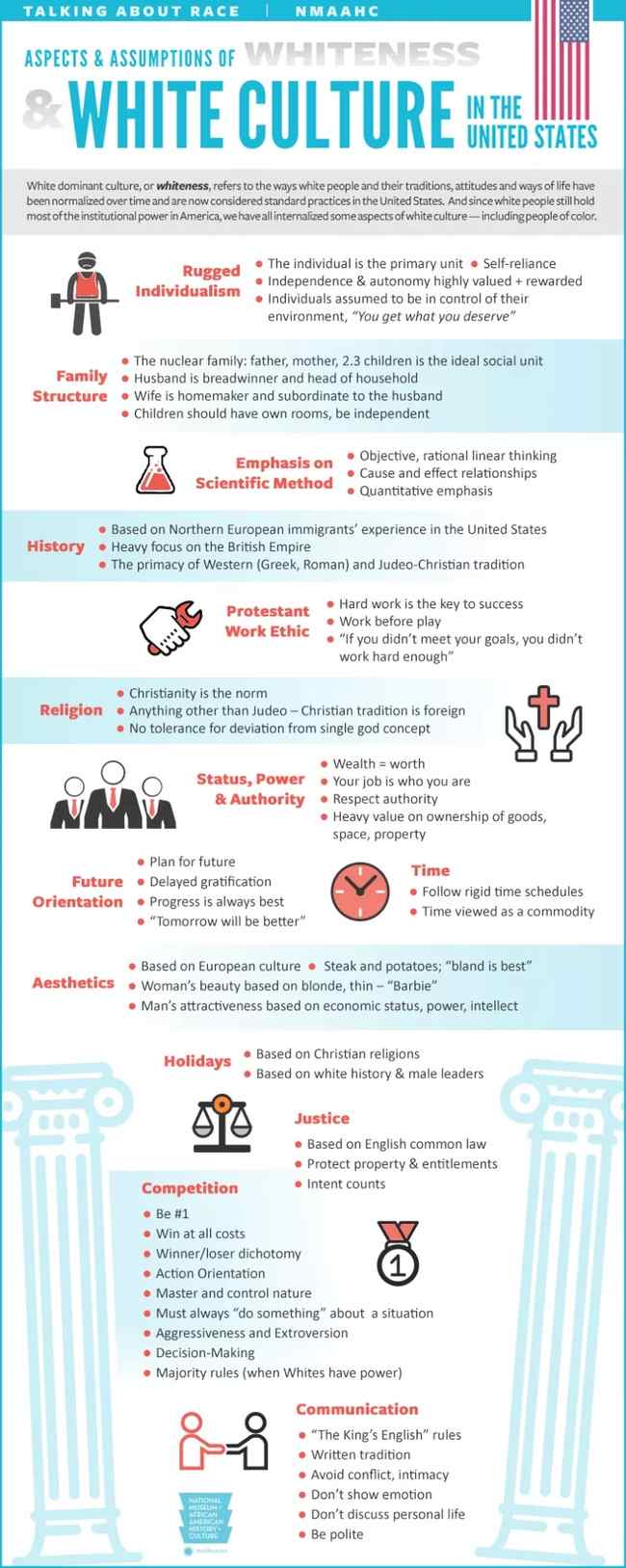 Even speaking proper English is "white culture." Science is white culture.
You know the score. Throw out the standards, and you can promote anybody you like, by race, politics, or sexual preference. All you need to do is reject "whiteness."
Spare me the outrage. All I learned here is that everybody knew Arday was a fraud, and they all decided to get in on the con, even though they knew it was wrong.
Because they believed they benefited.
Editor's Note: We now have the room to run outside commentary by some of our favorite and most provocative thinkers on the Right. That only happens because of the support of our readers, who ensure that we have the resources to keep providing an independent platform and independent voices in a sea of Protection Racket Media domination.
Help us maintain that fight! Join HotAir VIP and use promo code FIGHT to get 60% off your membership.



Join the Conversation
VIP members get the ability to comment on articles.