
Things have been a little busy here in the United States, so let's just say that not all eyes have been focused on the goings-on in Haiti, the premier "Shi**thole Country" in the Western Hemisphere.
That doesn't mean those goings-on aren't interesting and important to us here in the United States. Haiti has been a thorn in our side for two centuries, to one extent or another, and anything that makes Haiti even a bit less of a mess is a good thing in general and a very good thing for the United States, not to mention the poor people condemned to be born and live in that little slice of hell.
Still, the day-to-day misery of Haitians rarely makes the news, and it takes some unusually awful event to become newsworthy.
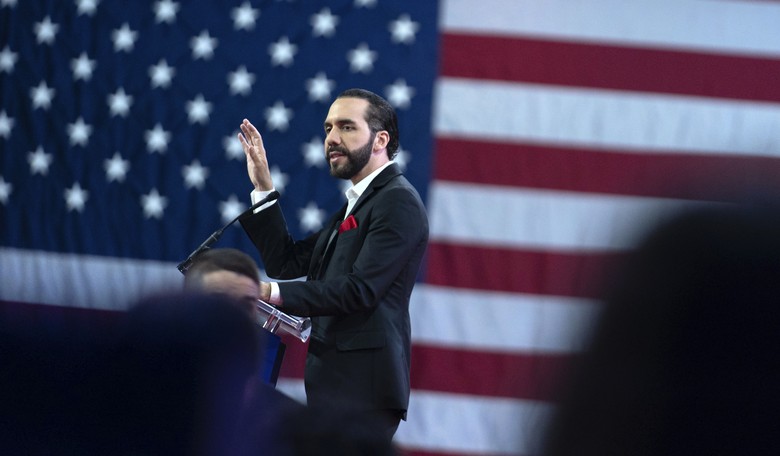
Unbeknownst to me and likely most of you, the United Nations has an anti-gang task force in the Caribbean country, and among the participants is El Salvador — a country that until not too long ago was its own version of Hell on Earth. It has since become an island of sanity in a world gone mad, and President Nayib Bukele is determined to help his neighbors along the way.
🇸🇻 ❤️ 🇭🇹 “IF GOD DID THIS FOR EL SALVADOR, HE CAN DO IT FOR COUNTRIES ALL OVER THE WORLD” El Salvador’s President Nayib Bukele @nayibbukele speaks on the success of El Salvador’s >2,000 troops that deployed to Haiti, after 4 of his men vanished at the hands of Hatian criminal gangs. Bukele’s soldiers brought the criminal gangs to their knees within days, and a boss of one of the gangs is now begging the UN for peace talks. The media has failed to report these developments, and much of what Bukele says in his address here is relevant to the United States and beyond. Watch 👇
— Mossadil Commentary (@MOSSADil) November 9, 2026
🇸🇻 ❤️ 🇭🇹 “IF GOD DID THIS FOR EL SALVADOR, HE CAN DO IT FOR COUNTRIES ALL OVER THE WORLD”
El Salvador’s President Nayib Bukele @nayibbukele speaks on the success of El Salvador’s >2,000 troops that deployed to Haiti, after 4 of his men vanished at the hands of Hatian criminal gangs.
Bukele’s soldiers brought the criminal gangs to their knees within days, and a boss of one of the gangs is now begging the UN for peace talks.
The media has failed to report these developments, and much of what Bukele says in his address here is relevant to the United States and beyond.
Four of El Salvador's soldiers were ambushed and kidnapped last month, and Bukele didn't waste any time responding. He sent 2,000 troops to rescue them, along with some badass special forces troops who, no doubt, trained with the United States. While they have yet to recover their troops, they have been kicking ass and taking names, and it seems that the Haitian government is happy enough to have them do so.
>El Salvador terrorized by gangs >Bukele takes power >declares war on organized crime >arrests tens of thousands >builds mega-prison >homicide rates collapse >international organizations condemn him >refuses to back down >4 Salvadorans reportedly kidnapped in Haiti >demands their return >sends 2,000 troops to Haiti >Haitian gang leader seeks UN dialogue >Bukele's anti-gang campaign becomes a regional talking point >Becoming a modern day Caesar Veni. Vidi. Vici.
— Trad West (@trad_west_) November 8, 2026
>El Salvador terrorized by gangs
>Bukele takes power
>declares war on organized crime
>arrests tens of thousands
>builds mega-prison
>homicide rates collapse
>international organizations condemn him
>refuses to back down
>4 Salvadorans reportedly kidnapped in Haiti
>demands their return
>sends 2,000 troops to Haiti
>Haitian gang leader seeks UN dialogue
>Bukele's anti-gang campaign becomes a regional talking point
>Becoming a modern day Caesar
Veni. Vidi. Vici.
Bukele has gained a lot of street credibility in El Salvador, with broad support at home, both for his presidency and this mission, which is remarkable:
A CID Gallup national telephone poll (October 24–27, 2026; n=600 adults, ±4 percent margin):
94 percent approve of Bukele’s overall performance.
91 percent feel proud to have him as president.
86 percent support the Haiti rescue operation.
82 percent express concern about risks to Salvadoran personnel.
68 percent favor maintaining or increasing Salvadoran personnel in the international mission.
73 percent believe the government’s response improves El Salvador’s international image.
51 percent are highly confident the four will be rescued alive.
That's a pretty impressive approval rating for Bukele, who obviously deserves it, and for a mission in a country that seems to swallow foreign interventions and spit them out chewed up and rotting on the ground.
“Among gang leaders like General Barbecue there is a real concern about Bukele's no-nonsense approach to gang leaders like General Barbecue" https://t.co/ZgWrGyW6iu
— Nayib Bukele (@nayibbukele) November 9, 2026
Bukele is all in and pretty cocky, and it's hard to know how justified that is or what might come back to bite his derrière. Obviously, the impulse to help Haiti, and especially the impulse to go in and kick some gang/terrorist behind, is admirable, and I hope he succeeds. But this is HAITI, which seems populated by a lot of demons. You literally have cannibals who live there.
Sanble gang yo pa vle goumen avè n… 🇸🇻🇭🇹 https://t.co/h7HpfabQKT
— Nayib Bukele (@nayibbukele) November 4, 2026

Bukele is taunting the gang leaders — in Haitian Creole, if you can believe it — and they certainly do seem cowed by an effective military actually being willing to fight them. Most "peacekeeping" forces are targets, not warfighters, but Bukele has more than a little Trump and Hegseth in him, and it shows.
The current United Nations task force, for instance, is grossly undermanned and seems to be all show and no dough; Bukele's deployment is large at 2,000-2,500 troops, and it is actually conducting real operations.
Haitian officials said they had killed a major gang leader in the capital as private mercenaries and at least 2,000 El Salvadoran troops join the fight to regain control of the troubled Caribbean nation https://t.co/tCE2UHGuan
— Bloomberg (@business) November 7, 2026
Still, and I hate to say it, The Economist has a point about Haiti being a black hole for foreigners, although I'm not so certain that calling El Salvador's gangs less scary than Haiti's. They were plenty scary; they just didn't eat people. In almost every respect, the Haitian gangs are less sophisticated than El Salvador's were.
Foreign military interventions have a mixed record in Haiti. Nayib Bukele should not presume that Haitian gangs are like their less scary counterparts in El Salvador https://t.co/73x6oXkrqw Photo: Getty Images https://t.co/UOQ1mrLgR2
— The Economist (@TheEconomist) November 9, 2026
I wish Bukele luck in his mission, both for his sake and for Haiti's. And despite the piss-poor history of Haitian interventions, you have to admit that Bukele has both a track record to admire and a much less hands-off approach that at least has a chance of working.
War is brutal, and when you have brutal enemies, you can't hold back. Bukele appears to be treating this intervention as a form of warfare, which is good.
Dead enemies don't shoot back.