
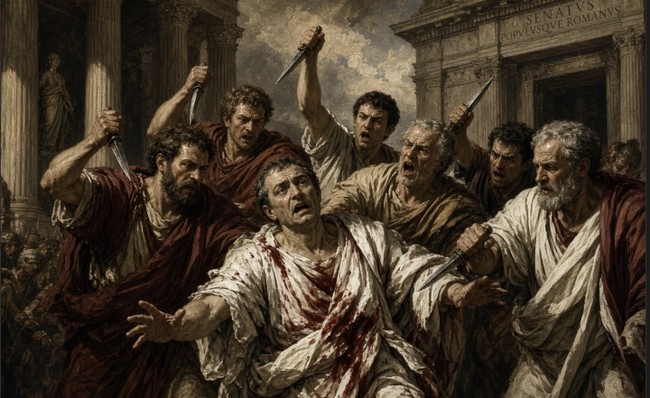
I spend a lot of time trashing the ruling elite that runs the West, and often use the term "elite" as almost a swear word, and most certainly as an insult.
I stand by that unapologetically. We have a ruling elite who are objectively terrible at their jobs, and every bit of anger directed at them is more than justified.
But...and this is not just a big but, but in some ways the whole enchilada...societies only succeed and continue to function well when you have a ruling elite that does its job well, and I use the term "job" quite literally.
Societies succeed most when they have a division of labor where everybody has a lane that corresponds with their talents and inclinations. Adam Smith outlined why that works so well in economic terms, but the concept extends well beyond the economy.
Ideally, the same is true in both the social and political realms, which is why we have artists, priests, academics, politicians, think tanks, policymakers, and pundits, all of whom form the cultural elite, just as founders, managers, investors, and business owners hold a special place in the economic realm. They get outsized rewards because they, in theory, have access to specialized knowledge, skills, and judgment that the average worker probably does not have, or at least doesn't have the inclination to focus on.
The reason why this system, when it works, is tolerated despite the fact that the various elites get outsized rewards such as better pay, more power, and lots of prestige is that most of us are happy enough with it because the rewards we are most concerned with are only tangentially related to the things the elite is focused on.
We want peace, prosperity, time to pursue our hobbies, a good social life, family time, and all the various things we tend to pursue in our time off. We work to live, not live to work, and 95 percent of us would actually hate doing what it takes to succeed in a well-functioning elite. We look at the rewards and think, "I would love to have those things," but few of us are inclined to do what it takes to climb that ladder, because it should be hard.
I've worked on campaigns and with politicians in the midst of legislative sessions, and the life sucks. We think it's all pressing buttons, going to cocktail parties, and hanging out with donors, but a good legislator often works 18-20 hours a day, and at the end of a Minnesota legislative session I've seen legislators spend 30-35 hours awake, or sleeping in chairs.
At least that's true for the ones doing the job, which many don't, actually. They just show up and do what their leaders tell them.
Now here's the problem: today's elites don't care about the purpose of their job, which is taking in the concerns of the average person, weighing them, assessing the competing values that clash, developing wise policies that will actually make things better, and delivering on the promise well enough that the people who grumble about how expensive and arrogant the elite are allow them to stay in place anyway.
It's a bargain, really: we hire an elite, implicitly through building structures that create them and deferring to their judgment, and in exchange, that elite charts a course that generally works well for most people.
The Founding Fathers were quite explicit about this deal, which is why our system of government is designed to be slow, cumbersome, and to check democratic impulses with mechanisms like the Senate and the Judiciary. That is also why, originally, Senators weren't even directly elected but chosen by state legislatures.
Checks and balances slow the populace's impulses and, in theory, set various elites against one another for power, holding each other accountable in the process.
That's the theory, and it worked for the most part. It is hardly ideal, but what is? It's far better than direct democracy, a simple oligarchy, or a monarchy. The Constitution sets the ground rules, the people choose the elite directly or indirectly, and the elites keep each other in check.
Right now, the elites are failing badly, and for many reasons. They aren't particularly wise as a class, and, as importantly, they are largely indifferent to whether the policies they pursue actually make life better for ordinary people. And the ordinary people have noticed, and are quite angry about it.
What do the elite care about? It's pretty obvious: they want more rewards for being elite — money, power, and prestige — without any of the work it takes to justify it. Instead, they spend their time chastising and even oppressing the ordinary folks they are assigned by class to serve.
That's why we are in the midst of a populist revolt, both here and throughout the West. People are rightly pissed off because the elites are skimming off the top more and more, and not remotely delivering on the reason why the people have ceded so much power, money, and prestige to them.
In an economy, an elite that fails at doing its job goes bankrupt or gets fired; in politics and cultural matters, the result is populism — a mass revolt against the elites.
That is where we are today, and the elites don't even understand it. What they see is stupid plebs getting out of line, and they reach for the tools they have to put them back in line — mobilizing their brownshirts, suppressing speech, passing laws to constrain freedom, and they do so while mouthing pretty words meant to soothe us like "democracy," "norms," "fairness," "fighting misinformation," and "diversity and inclusion."
That's all bulls**t. They are defending themselves and helping themselves to the fat of the land. The elites throughout the West see themselves as a class that competes with the rest of us and is working to win that fight. They don't want to serve; they want to rule.
Writers who worry openly about populism are not wrong, per se, because direct democracy is not a good thing. How many of you want to spend your waking hours after work poring over bills, reading think tank papers, weighing the costs and benefits of various policies, and trying to read all the research and keep up with the news on every topic of public interest?
Almost none of us do. We'd love the rewards, but not the work, which is why the division of labor is generally worth it. In fact, if you look a bit deeper, even populism is an elite-driven phenomenon. We can all identify the leaders of populist movements: Trump, Milei, Sanders on the left, the AfD leaders, Bukele, and the various pundits whom we all read and listen to.
The division of labor still exists for populist movements; we are just fighting over which elite leads.
Our elites look at populist movements and think, "Oh no, the plebs are revolting again," which is exactly the wrong impulse and proof that they don't get it. Populist waves only gain steam when the elite is failing at its job. Usually, people are happy to leave the social and political order alone, even if they grumble. The Founders even mentioned this in the Declaration of Independence because it is true: "mankind are more disposed to suffer, while evils are sufferable, than to right themselves by abolishing the forms to which they are accustomed."
When a system is generally working well enough, we leave it alone even when it occasionally fails. In fact, throughout history, the ordinary people are more inclined to defend a system than the disaffected elites, who want their share of the spoils. Every revolution is led by a disaffected elite, not a mass uprising. Somebody leads, and those who want to displace the system and take over usually fail because people prefer not to risk major change.
Populism gains steam, as it is doing now, because more and more people are no longer willing to suffer the evils that the ruling elite is imposing. "Eat the bugs," "get rid of your car," "pay more for energy," "shut up," and "trans your kids" are all a bridge too far.
The current ruling elite got there by making an implicit bargain: pay us well and honor us, and we will make things run well for you; they have broken it. Academia is expensive and run by people who hate us; politicians screw everything up and spend tax money on fraud that helps their friends; journalists lie to us.
The populists are right about what is failing. That doesn't mean that they would be any good at running things, but it does mean that the rise of populism is a flashing red light that the system is failing and the ruling elites need to be replaced.
Will the replacements be better, or worse? One competing faction is the socialists, or more precisely the Red/Green alliance. Another is the techno-optimists. Yet a third is MAGA, a mixed bag of brilliant people and cranks. Perhaps there are or will be more contenders.
Somewhere in there will be a new coalition of ruling elites, and it's hard to say who.
But if you think that no new elite will arise to take the place of the current one when it eventually falls, as it will someday, you are wrong. No large society exists without a ruling elite, because it's a necessary part of the division of labor.