
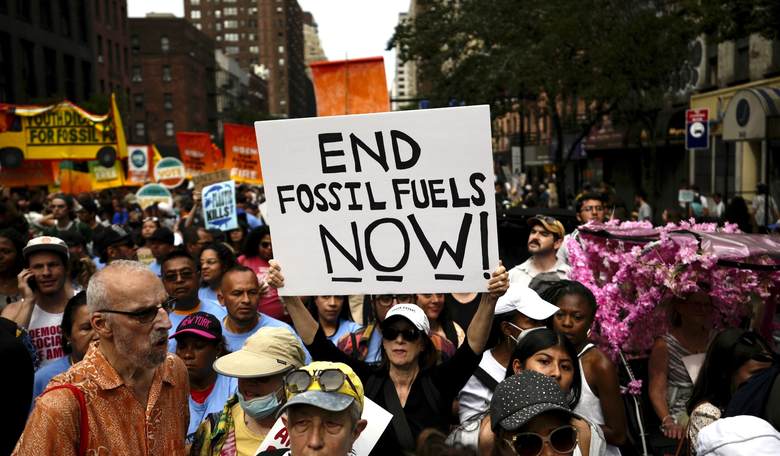
The climate scaremongering is far from over, but reality is reasserting itself.
After years of negotiations, days of fruitless meetings, and far less hoopla than usual, the 31st Conference of the Parties to the United Nations Framework Convention on Climate Change (COP31) ended in total failure.
Does this mean the Earth is healing and people realize that all the fake panic is just a bunch of hot air? Probably not; right now, political leaders in Western countries care more about their political futures than the fate of the world.
The annual UN climate summit collapses following weeks of talks after countries fail to agree on moving away from fossil fuels. https://t.co/HQ9NQRY785
— CNN Breaking News (@cnnbrk) November 22, 2026
The first indication that COP31 would be a total bust is that the usual suspects didn't even bother to show up. The only major world leader, if you could call him that, was Andy Burnham. Burnham, in perhaps the most ironic self-own of 2027, flew from the UK to Turkey to give a six-minute speech, then flew back the same day, landing in Ireland.
That was about 4,500 miles of air travel, emitting about 70,000 tons of CO2 to blather a bit.
Bureaucrats, of course, got a nice trip to Turkey, although they spent far too many hours arguing about stupid things before throwing up their hands in disgust and running straight to the cameras to b***h about each other.
NGO leaders got to b***h even more, since their grift is likely to get fewer resources than they hoped.
The COP31 climate conference in Antalya, Turkey, collapsed Sunday as countries failed to agree to an overarching deal after more than two weeks of contentious negotiations. The breaking point was over the very cause of climate change itself: fossil fuels.
The annual UN climate talks, which stretched deep into overtime over the weekend, hold the dubious honor of being the longest COP in history and the first major breakdown since COP15 in Copenhagen in 2009.
Experts criticized the conference as a stunning failure of leadership at a time when the climate crisis is accelerating with increasingly deadly consequences. “This has been the worst ever COP and its collapse needs to be a wake up call for the world,” said Mohamed Adow, director of the energy think tank Power Shift Africa.
"Experts." God saved us from experts this time around.
Deep divisions proved impossible to bridge over key issues — most importantly, including language that the world would need to move away from fossil fuels, a phrase that did not end up in the agreement, and increasing financial support for countries already grappling with climate catastrophes.
The European Union, Panama, the Marshall Islands and Norway were among those that rejected it. Darragh O’Brien, Ireland’s climate minister who is helping lead negotiations for the EU, said the bloc would not endorse a deal “that does not even mention fossil fuels.”
COP31 president Murat Kurum acknowledged support was not there to gavel through the pact. “We have done our utmost,” he said, but “it is clear that there are parties in this hall who oppose this text. We recognize that there is no consensus on this document.”
EU negotiators complained that the oil-exporting countries didn't want to renounce oil exports, which should have surprised nobody. What none of those same countries will quite admit is that the oil-importing countries don't really want to give up oil imports either, as every step they have taken to do so has been a total disaster for their economies and, more importantly, for the political futures of the "leaders."
That's why those leaders stayed away in the first place.
A sobering recent UN report confirmed the world will overshoot its target of limiting global warming to 1.5 degrees Celsius above pre-industrial levels. On current policies temperatures are expected to rise to a potentially catastrophic 2.8 degrees. The planet is currently at around 1.4 degrees of warming and the impacts have been starkly clear, from catastrophic flooding in Nepal to deadly heat in Europe.
Yet, COP31 laid bare the enormous gap between those seeking ambitious action, often the most climate-vulnerable countries, and the oil-rich nations pushing back.
In common with previous COPs, the biggest sticking point came down to two words: fossil fuels.
At COP28 in Dubai in 2023, countries agreed to an unprecedented call to “transition away from fossil fuels.” Since then, this has neither been repeated nor built upon as oil-producing nations balk at any reference to the driving force of the climate crisis.
The biggest losers in all this are the grifters who want more money to compensate them for climate change, and, hopefully, the NGOs that make it their business to gobble up money to promote climate action and "aid" with the climate transition.
Fear not, NGOs, your buddies in government will likely keep a good chunk of money flowing, just not as much as you would like.
There have been just two previous times in three decades of annual global climate talks when nations failed to reach agreement, in Copenhagen and at COP6 in The Hague in 2000. Coming at a low point for global cooperation, the breakdown deepened doubts about whether the United Nations process is up to the task of confronting an overheating planet.
Even in its best moments, that process hasn’t been easy. Many have questioned the viability of a system marked by lawyerly fights over wording and a long history of unrealized promises.
It has been further complicated by the exodus of the United States under President Trump from the global effort to fight climate change. Some participants say that in that vacuum, other countries have staked out harder positions, leaving the process gridlocked.
Countries in 2023 had clinched a celebrated agreement to “transition away” from coal, oil and gas — what organizers called the “beginning of the end” of the fossil fuel era. But in three COPs since then, no final agreement has directly mentioned fossil fuels. Canada is fast-tracking an oil pipeline. Australia has approved new projects that would last for decades. And the United States, under Mr. Trump, has used trade policy to promote fossil fuels abroad.
“Fossil fuel-producing countries are banding together, no matter which part of the world they come from,” said Lynda Tabuya, Fiji’s climate and environment minister.
Fiji complaining about the collapse of the COP31 process is rich; the country literally exports its WATER using fossil fuels to customers interested in fake luxury. Water bottled in plastic, shipped on vessels that burn heavy fuel oil, which is almost asphalt.
Fiji water is about 25 percent of the country's exports. Please.
Fiji's worries stem not from climate change; what they want is the promised subsidies that wealthy countries promise to countries supposedly in danger from climate change.
At base, the problem all these negotiators face is that concern about carbon emissions is a luxury, and few countries either can afford to or even want to focus on the issue because all are feeling the economic pinch.
Ironically, if the war in the Gulf hadn't raised oil prices, an agreement that would raise oil prices would have been more likely. Because a natural experiment was done and nobody liked the results, it was hard to go through with an artificial one.
It turns out that we can't afford the luxury belief.
No worries, though. When oil prices go down, the climate alarmists will get their day again.
When the costs are in the future, politicians are happy to promise to pay them; when they are right here, right now, they decide they are not worth the price they will pay. They, being the politicians, don't care a whit about the price you and I will pay, as long as they aren't in a position to be punished.