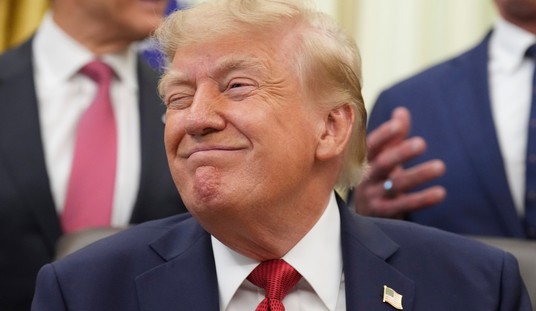
So much for "off ramps," eh?
The US media has prattled about Donald Trump and his impulse for an exit from the war with Iran since it began sixteen days ago. The Iranian attacks on shipping in the Strait of Hormuz has been hyped up in the media as unanticipated, and the rising price of oil as somehow rattling to the US as a consequence of war in the Persian Gulf.
Axios suggested this morning that Trump has blundered into a trap in Iran, and now can't talk his way out of it:
The Iran war, now entering Week 3, is the first time Trump's style has made it impossible for him to easily talk or improvise his way out.
Why it matters: Trump could wind up trapped between his caprice and the realities of war. He expects a quick, clear victory. But unlike tariffs that can be swiftly imposed and rescinded, the war's outcome is beyond unilateral control and quick fixes. And Iran gets a say.
Trump is working to help break the Persian Gulf oil jam. But in doing so, he risks getting caught in an "escalation trap," where a stronger force is incentivized to keep attacking to demonstrate dominance amid diminishing returns.
A senior Trump administration official practically admitted as much, telling Axios' Marc Caputo: "The Iranians f*cking around with the Strait makes [Trump] more dug in."
Ahem. We are but seventeen days into this conflict. It took us eight days to complete Operation Urgent Fury in 1983 against Grenada, which had 2,000 troops, no ballistic missiles, and only 12 anti-aircraft guns. The US landed 7300 troops, assigned a carrier task force (the USS Independence) as well as three destroyers and a squadron or two of F-14A Tomcats to crush the Cuban-led force on the island. It took two weeks of military operations to capture Manuel Noriega in Operation Nifty Package in December 1989-January 1990, although most of the military operations wrapped up on Day Four.
Not only does this presentation of the current status of the conflict amount to premature bedwetting, it also assumes a stalemate. It's far too early for that conclusion, and moreover, it's simply not true. The Institute for the Study of War has a much more sober look at the conflict, noting that Iran's asymmetric strategies and deterrents complicate matters for the US and Israel. However, both have clearly understood that challenge, and Iran's position sharply degrades every day the conflict goes on:
Iran’s military weakness relative to the United States led it to adopt an asymmetric strategy against Washington that seeks to outlast Washington rather than to militarily defeat it outright.[3] The various lines of effort that comprise this strategy have changed over the years, but during this war, Iran has relied on the five key efforts outlined above. Iran has likely calculated that if these five prongs cause US casualties, drive up oil prices, and impose economic costs on both the US and its Gulf allies, the United States and Israel would make a political decision to end the war without achieving their objectives. Iran’s naval and aerial drones, missiles, and fast attack craft are the critical requirements for its approach, however. These assets can cause the most lasting damage to oil markets and the most consistent and highest casualties and thus impose the most severe political pressure. Global terrorism, cyber attacks, and proxy attacks are less effective and impose only limited political pressure on the US government. Naval mines, which could close the strait, will be cleared in time.
The US-Israeli combined campaign, which has focused on stopping missile and drone attacks as soon as possible, is successfully limiting attacks on US partners and interests in the region. The combined force began this effort on the first day of the campaign, and it has gradually decreased Iran’s ability to fire missiles and drones. A senior Israeli military official said that Israel has destroyed or rendered combat ineffective between 260 and 290 of an estimated 410 to 440 launchers.[4] The Iranian missile force troops are reportedly also demoralized, deserting, and refusing orders, according to Israeli intelligence.[5] The campaign has struck drone launchers, though neither the United States nor Israel has released information about the numbers or type of drone targets struck. Iranian ballistic missile and drone launches have in any case decreased gradually since the beginning of the war.[6] Some individual drones have penetrated air defenses and caused politically unacceptable damage to oil infrastructure, but the overall trend in attacks is overwhelmingly positive.[7] ...Iran’s attacks have not yet affected US military operations and fallen far short of Iran’s hopes for attacks with thousands of missiles and drones, however. The available evidence supports the assessment that the combined campaign is achieving its military objectives thus far but is not yet complete. Declaring the campaign a failure at this stage is therefore premature. The collapse of Iranian drone and missile attacks — down significantly since February 28 — presents a compelling picture that the military campaign is degrading ballistic missile and drone capabilities.[17] Continued drone and missile attacks — not to mention the remaining 150 launchers — indicate that these assets remain a threat and will need to be fully suppressed, of course. The maritime threat will need to be similarly suppressed. But the military campaign against both the missile and drone attacks and the maritime attacks must be evaluated based on whether the evidence shows progress is being made towards the military objectives. It is far too early to forecast whether the current military campaign will achieve overall political objectives or how long disruptions to the flow of oil through the Strait of Hormuz will last. But declaring this operation a military failure is premature while the campaign remains underway and incomplete, particularly as the evidence clearly shows progress being made towards accomplishing its core objectives.
Axios is correct that the attacks on shipping through the Strait of Hormuz has raised the stakes. Now that Iran has let that genie out of the bottle, Trump has to eliminate that threat entirely, lest Iran deploy it for the foreseeable future. Fortunately, as Trump explained today, that's what he plans to do:
Trump:
— Open Source Intel (@Osint613) March 16, 2026
"If we left right now, 10+ years to rebuild. But I am still not declaring it over." pic.twitter.com/E6cHlSUkY8
It's also clear that Trump still has his eye on regime change as a desired outcome of the conflict. Thus far the Iranian people have not yet risen up, one reporter pointed out to Trump this moment, and literally asked, "What's up with that?" Both Trump and Benjamin Netanyahu have warned Iranians to refrain from action over the last two weeks, warning them that the time will come soon for the Iranian people to take back their country, but that time has not arrived yet. Trump explained the power imbalance that still exists in Tehran especially at the moment:
REPORTER: Iranians aren't rising up like you asked, what's up with that?
— Open Source Intel (@Osint613) March 16, 2026
PRESIDENT TRUMP: "They put out statements that if you protest, you will be shot and killed. The protestors have no guns."
"It's very hard for them to protest. I fully understand it."
"They killed 32,000… pic.twitter.com/pwrXyX1nHx
Again, we are on Day Seventeen of a war against a thoroughly prepared enemy who has conducted war against us since November 1979, and against the region for just as long. The IRGC has thoroughly entrenched itself into Iran, and it will take more than a few hours of bombing to force it into collapse. The question at hand is not whether we want to stop on a timeline – it's whether we fight to the finish.
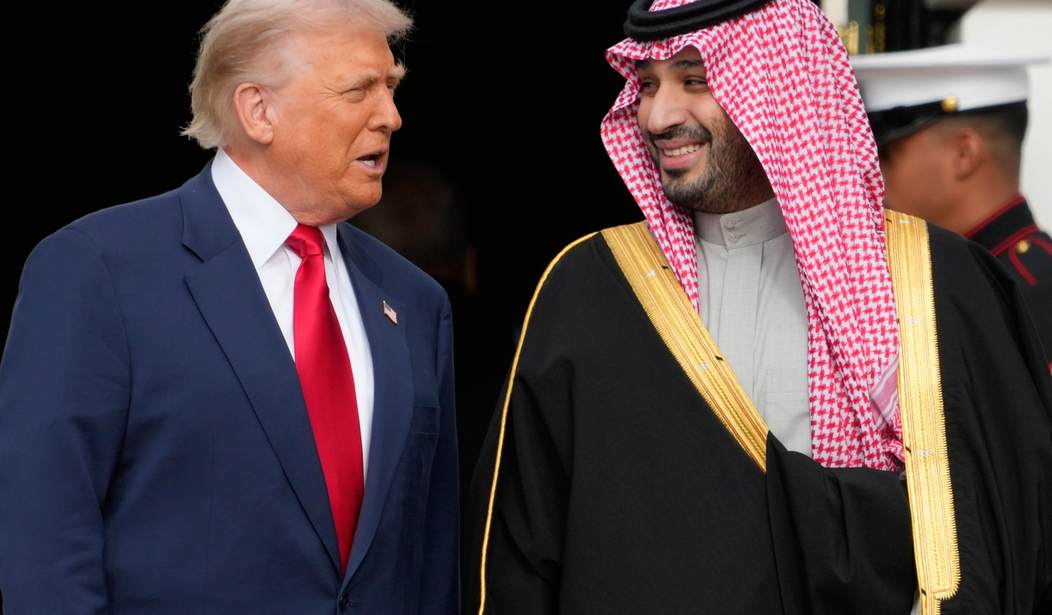
Interestingly, that's exactly what the Saudis think, too. The New York Times buries this news deep in an analysis about the "stark choices" Trump supposedly faces in the third week of the war. Iran has made the Saudis a target of their "escalate to de-escalate" strategy, part of their necessarily asymmetric approach to a war with the US and Israel. Riyadh has plenty of reasons to pressure the US into backing down, but the Crown Prince has instead urged Trump to see this war all the way through to the end:
Through it all, Mr. Trump and Mr. Netanyahu have been speaking almost every day, the prime minister said at a news conference last week. White House officials confirm the frequent conversations and say Mr. Trump is also talking regularly to Arab leaders, particularly Mohammed bin Salman, the Saudi crown prince.
According to several officials, the advice Mr. Trump is getting from the prince is to keep hitting the Iranians hard — essentially repeating the advice that King Abdullah of Saudi Arabia, who died in 2015, repeatedly gave to Washington: “Cut off the head of the snake.”
That is the only way to approach this war, which is to say, Trump has to fight it to win. The US and Israel has made remarkable progress toward victory after seventeen days, but it will require more effort to show that we will not be deterred from delivering the consequences of the mullah's 47-year war against the US and Israel now that it's gone completely hot. Let's give it at least 47 days before we start thinking about stalemates and "stark choices."
Editor's Note: For decades, former presidents have been all talk and no action. Now, Donald Trump is eliminating the threat from Iran once and for all.
Help us report the truth about the Trump administration’s decisive actions to keep Americans safe and bring peace to the world. Join Hot Air VIP and use promo code FIGHT to get 60% off your membership!