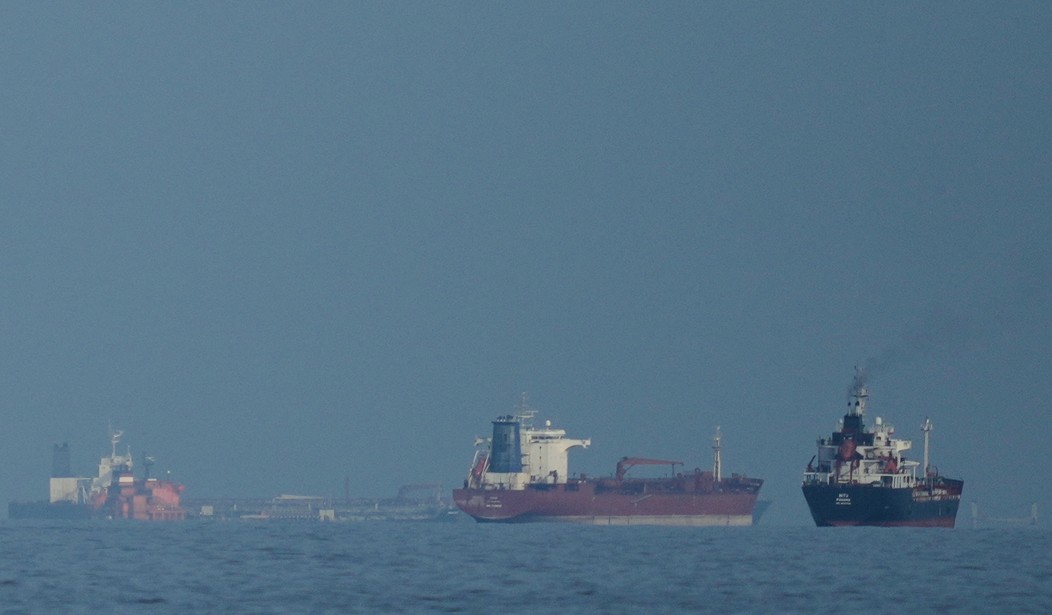
The situation in the Strait of Hormuz was looking pretty good last month but Iran seems to have caught its second wind. IRGC has renewed attacks on tankers using the southern corridor under the protection of the US Navy.
The swift rebound in shipments in recent weeks has been driven by U.S. naval protection and earlier waves of strikes that knocked out Iranian radar and communications along the contested strait. The United Arab Emirates and other producers have set up an elaborate system of shuttle runs in which tankers load inside the Persian Gulf, exit Hormuz and transfer the crude to vessels waiting outside the waterway.
But after several days without reported attacks on ships toward the end of last month, the U.K. Maritime Trade Operations, which is affiliated with the Royal Navy, has reported seven strikes on vessels around the waterway since Sept. 28. On Sunday, it reported another strike, but didn’t specify when the incident happened.
Iran’s Islamic Revolutionary Guard Corps navy issued a warning to ships planning to use the U.S.-backed route through the strait on Saturday, saying that they would be targeted and destroyed. “Don’t trust U.S. Navy and don’t use south corridor at all and don’t put your life in danger,” a radio message transmitted on a public shipping channel and reviewed by The Wall Street Journal said.
The NY Times is reporting today that there have been a total of 11 attacks in the past week.
At least 11 tankers have been attacked in and around the Strait of Hormuz since last Monday, including four in the last two days, a stark reminder that the recent increase in exports from the volatile region rests on a series of fragile workarounds...
The price of Brent crude oil, the global benchmark, was little changed on Monday, hovering around $102 a barrel. Analysts said the big run-up in oil prices since the war had been held in check in recent weeks by the increase in oil exports from the Persian Gulf, which have reached higher levels than at any point since the start of the war.
It's no secret what is happening here. The Iranians knew that supplies making their way through the Strait were returning to pre-war levels, meaning their only leverage in this conflict was evaporating. So they are desperately trying to stop that progress again to show they are still in the fight. In short, Iran is using terrorism because that's all it has.
Dimitris Maniatis, the founder of Marisks, a maritime risk firm, said he believed that Iran’s burst of attacks was a response to the increase in commercial ships that have passed through the strait in recent weeks.
“What the Iranians are doing now is shooting blindly,” Mr. Maniatis said, using missiles and drones simultaneously. “Their objective is to assert control over the Strait of Hormuz through fear.”
Mr. Maniatis said Iran was trying to “overwhelm the capability” of U.S. forces that were trying to defend ships passing through the strait. On Monday, yet another tanker was struck by an “unknown projectile” while passing through the strait, causing a fire in the engine room, according to the United Kingdom Maritime Trade Operations, which is administered by Britain’s Royal Navy. As of Monday night, the crew was working to contain the fire.
Iran's best efforts look pretty weak at this point, but it keeps their "resistance" in the papers. Maybe that's the best they can do at the moment. Meanwhile, the economic situation in Iran is getting very dire.
Iran’s oil minister has resigned days after allegations that an intermediary trust selling Iranian oil abroad owed millions of dollars’ worth of export receipts to the state.
Mohsen Paknejad’s departure comes as Iran grapples with a dire economic situation, including inflation running at 85%. An overall drop in oil receipts has led to a massive shortfall in foreign exchange earnings and one of the biggest drops in the value of the rial since the Iranian revolution in 1979...
The situation is so bad that even Iran’s national security adviser is admitting times are desperate. There are also indications that people are quitting their jobs because their salaries can't keep up with inflation.
Mohsen Rezaei, Iran’s top security official, made the rare admission on Saturday at a high-level government meeting about how to stabilize the economy after more than seven months of war.
Iran’s currency, the rial, has plummeted since the United States and Israel launched the war on Iran in February. The decline has accelerated sharply in recent weeks, since the United States ratcheted up sanctions and enforced a naval blockade. That has made imports more expensive and deepened a longstanding cost of living crisis that sparked nationwide protests last December that the security forces crushed with deadly force...
In recent days, government and private sector employees, including nurses and teachers, have taken to social media to say they were quitting their jobs because their salaries could no longer support them. Iranian local media has reported that retired government employees have held protests in the past few weeks because they said they had not received their full pensions.
Here's more on the mass quitting.
In recent days, a new wave of protest videos circulating across social media platforms has highlighted the deepening scope of Iran’s livelihood crisis. The videos depict public school teachers explicitly requesting resignation, buyouts, or early retirement.
The central message driving these statements is concise: “Working is no longer economically viable.”...
According to recent estimates, the monthly cost of a basic food basket for a family of three reached over 16 million tomans by mid-summer 2026. Meanwhile, monthly earnings for many teachers, healthcare workers, and public professionals remain below 25 million tomans. Consequently, the salary of an experienced teacher or nurse covers roughly 70 percent of basic food costs alone, excluding housing, healthcare, transportation, and education. Under these conditions, formal employment under current wage structures ceases to function as a viable economic endeavor.
Obviously the IRGC goons aren't missing any meals or any paychecks, at least not yet, so they can continue to talk tough while the teachers and nurses struggle. At some point, they'll have to give in but will that happen before Democrats can come to their rescue next year? That depends on how things go in our election next month.
Editor’s Note: Thanks to President Trump and his administration’s bold leadership, we are once again respected on the world stage, and our enemies are being put on notice.
Help us continue to report on the administration’s peace through strength foreign policy and its successes. Join HotAir VIP and use promo code FIGHT to receive 60% off your membership.









Join the conversation as a VIP Member