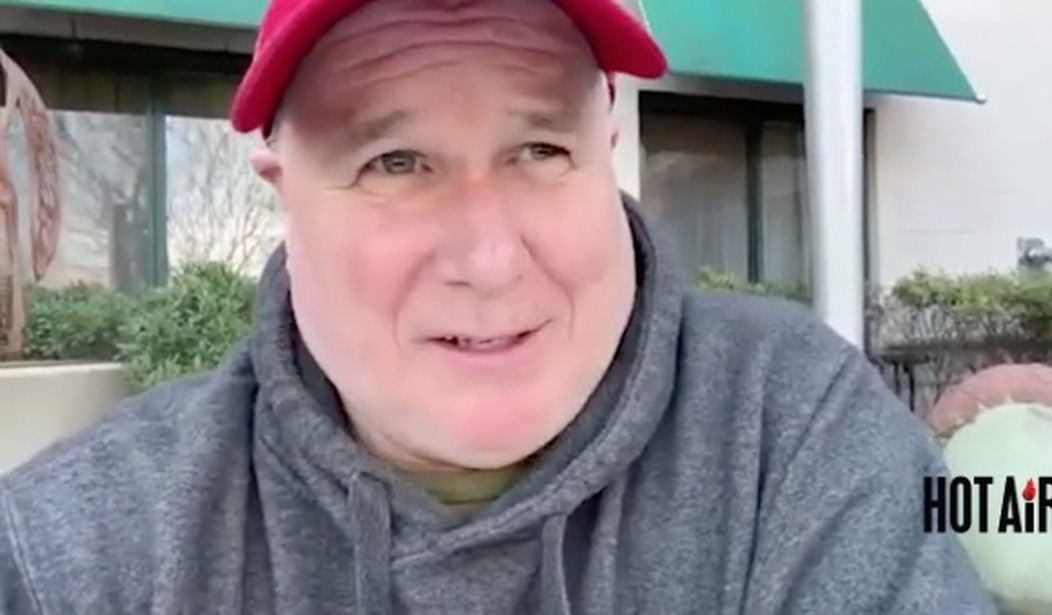
I get that people are tired of talking about this topic. I’m tired of it also. I’ve moved on to other projects.
That’s why for eight years I said no when Cathy Alter, an accomplished D.C. journalist, contacted me and asked - sometimes begged - to do a profile. Cathy made clear that she was not interested in politics or what had made me briefly famous many years ago. I had barely survived and was still suffering from PTSD.
Finally, last year I said yes to Cathy. Enough time had passed. I’ve known her for thirty years, and she emphasized that she wanted to write a deep-dive, 6,000-word profile for Washingtonian magazine about trauma, my life growing up in D.C., and yes, but in a minor key, the drama that I had been involved in.
Cathy interviewed me three times, spoke with old friends and girlfriends, and, in December, contacted me about setting up a photo shoot.
Then, last week, she texted me to say the profile had been killed. She wouldn’t tell me who made the call or why. The text:
Hey there. I wanted to tell you as soon as I heard (in a phone call today with the editor), Washingtonian is killing the story. I’m tied up now with a list of crap to finish but I wanted to let you know. How about I take some of my kill fee and treat you to a fancy meal? I’m really sorry. And really disappointed.
Hot Air readers have heard me caterwauling about this for a long time - too long. I agree, and the profile Cathy Alter wrote was going to be a final, concluding note on the matter. I haven’t seen the piece, but my guess is that it concluded that I’m a nice and conscientious person, not a saint, and that I had survived something deeply traumatic. That would be the end. For anyone arriving late: In 2018, I was involved in the Brett Kavanaugh Supreme Court confirmation hearing. Kavanaugh, a high school friend, was falsely accused of sexual assault by a woman named Christine Blasey Ford. Ford claimed I was in the room when the alleged assault took place in 1982, when we were in high school. My world was turned upside down. Reporters one through my car and told lie after lie about me. People stared at me in public or approached me to talk. My entire past was examined. Senators demanded I be subpoenaed and that for my past drinking, dating, and writing, I feel shame.
I didn’t feel shame at the time, because Brett and I were innocent. Moreover, as I write in my book The Devil’s Triangle, the entire thing was an oppo research hit. However, I did develop almost crippling shame in the aftermath. In October 2018, I had a panic attack during a screening of the film First Man. It was triggered when the lights went down and a young woman I didn’t know came into my row and sat a couple of seats down from me. I was sure that she was a plant, that she was setting me up. I felt terror and shame.
It has taken years to understand and diagnose a key component of the PTSD affliction - the emotion of shame. New research is revealing the role of shame in PTSD. Shame is also a favorite go-to weapon of the political left. Soros-backed protesters repetitively yell at their opponents to feel Shame! Shame! Shame!
When I freaked out at the screening of First Man and had to retreat to the lobby, I was experiencing the usual symptoms associated with trauma - fight-or-flight adrenaline, anger, confusion, hyperventilating. Yet there was also a powerful feeling of shame. Researchers have recently explored shame as a part of trauma that is separate from things like fear and anger. In the paper “Association Between Shame and Posttraumatic Stress Disorder: A Meta-Analysis, four scientists argue that “over the course of the last decade, the primacy of fear and anxiety in our understanding of post-traumatic stress disorder (PTSD) has given way to the recognition that negative emotions other than fear contribute to PTSD’s development and course. It has been widely documented that traumatic exposure disrupts affective processes beyond the fear network. For some individuals with PTSD, shame, sadness, or anger are more associated with the disorder’s clinical distress and functional impairment than pathological fear.” Furthermore, the American Psychiatric Association [APA] (2013) “points to this increasing field-wide appreciation of negative affect in PTSD. Specifically, the previous requirement that individuals must experience fear, helplessness, or horror after trauma exposure has been removed, and a new symptom cluster that captures alterations in negative cognitions and affect (e.g., guilt, shame, and anger) has been added.”
The journalist Helen Andrews has called PTSD a “shame storm.” In 2019 Andrews was publicly embarrassed on television when an old boyfriend began insulting her about how their relationship ended. Her shame was debilitating: “Everyone at work was supportive, but no amount of support could counteract the paranoia that settled in over the next weeks and months. My colleagues probably didn’t believe the woman they worked alongside was secretly a comic-book villain—but surely the suspicion had been planted? I never knew whether someone on the subway was giving me a second glance because he knew me, or because he recognized me from the video. Fellow journalists reported back to me from conferences where [my ex-boyfriend] Todd expatiated on my depravity at length—in one case, before an audience that included my boss.”
Andrews insightfully sums up the new digital world of shame:
No one has yet figured out what rules should govern the new frontiers of public shaming that the Internet has opened. New rules are obviously required. Shame is now both global and permanent, to a degree unprecedented in human history. No more moving to the next town to escape your bad name. However far you go and however long you wait, your disgrace is only ever a Google search away. Getting a humiliating story into the papers used to require convincing an editor to run it, which meant passing their standards of newsworthiness and corroborating evidence. Those gatekeepers are now gone. Most attempts so far to devise new rules have taken ideology as their starting point: Shaming is okay as long as it’s directed at men by women, the powerless against the powerful. But that doesn’t address what to do afterward, if someone is found to have been wrongfully shamed, or when someone rightfully shamed wants to put his life back together.
Kavanaugh and I were raised in an Irish Catholic community that recognized that shame is a healthy thing. It’s part of a well-formed conscience that prevents you from hurting others. Yet your life was not meant to be ruled by shame. During one of the worst parts of the Kavanaugh nightmare, my friend and book editor Adam Bellow called me. “So,” he said, “how does it feel to have everyone in the entire world projecting their shadow onto you?” Shame stemming from trauma can also cause suicidal ideation or a “shame spiral.” This is the darkest and most difficult part. The trauma is making it hard to function, the shame storm is raging, you have financial and emotional difficulties that require outside help, and oftentimes those you ask for help compound it all by shaming you again. What’s wrong with you? Why are you asking for money? They’re right, you were raised to have pride and not do these things. You begin to think there’s only one way out.
These were some of the things I was dealing with as I continually rebuffed Cathy every year when she would plead with me to do a profile. I would be putting myself out there, becoming vulnerable again. Her breezy tone in the text she sent about how they killed the piece, but I’ll buy you lunch, indicates that maybe she doesn’t understand trauma, despite my talking to her about it for hours.
One of the ways I have dealt with PTSD is to study people in other cultures who had been shamed by political tyrants, and how they fought back. The most compelling and evil model were the Stasi, the secret police in communist Germany. As journalist Laura Williams has described it, “If someone looked like he might challenge the Communist Party’s legitimacy or control, the Stasi systematically destroyed his life. They used blackmail, social shame, threats, and torture. Careers, reputations, relationships, and lives were exploded to destabilize and delegitimize a critic. Some forms of harassment were almost comical: agents spread rumors about their targets, flooded their mailboxes with pornography, moved things around in their apartments, or deflated their bicycle tires day after day. Others were life-altering: Individuals labeled as subversives were banned from higher education, forced into unemployment, and forcibly committed to asylums. Many suffered long-term psychological trauma, loss of earnings, and intense social shame as a result of Stasi lies.”
A German academic wrote this about shame and the Stasi:
Stare long enough into the eyes of a dog who does not know you, and he will begin to bark. Many animals, human beings among them, experience the stare as threatening aggression. But unlike other animals, human beings can feel shame at being exposed to an unwavering look, a look that threatens the private self shared only in deeply trusting relationships. For the existentialist philosopher Jean-Paul Sartre, hell was other people, the gaze of others in a room that was never dark, a place of no exit in which no one could close their eyes. On a broad historical scale, it was not long ago that the punishment of public shaming was abolished in Europe; readers of English literature may recall, for example, the laughing stock in Shakespeare’s King Lear. While this practice no longer exists in modern society, the expression “to be a laughing stock” persists as do, obviously, situations which provoke shame. But it is not just the exposure of guilt that elicits feelings of shame, nor even the violation of one’s integrity, or being personal and vulnerable without receiving a reciprocal confidence. It is an anxious concern with the self, the feeling that the other has taken possession of us and that we have lost something of ourselves, past control and recovery.
Cathy Alter is a freelancer. She can sell her piece somewhere else - Quillette, The Free Press, etc. So maybe it will see the light of day. If I am burdened with too much shame, the editors of Washingtonian magazine have none.
Editor's note: If we thought our job in pushing back against the Academia/media/Democrat censorship complex was over with the election, think again. This is going to be a long fight. If you want to join the conversation in the comments -- and support independent platforms -- why not join our VIP Membership program? Choose VIP to support Hot Air and access our premium content, VIP Gold to extend your access to all Townhall Media platforms and participate in this show, or VIP Platinum to get access to even more content and discounts on merchandise. Use the promo code FIGHT to join or to upgrade your existing membership level today, and get 60% off!











Join the conversation as a VIP Member