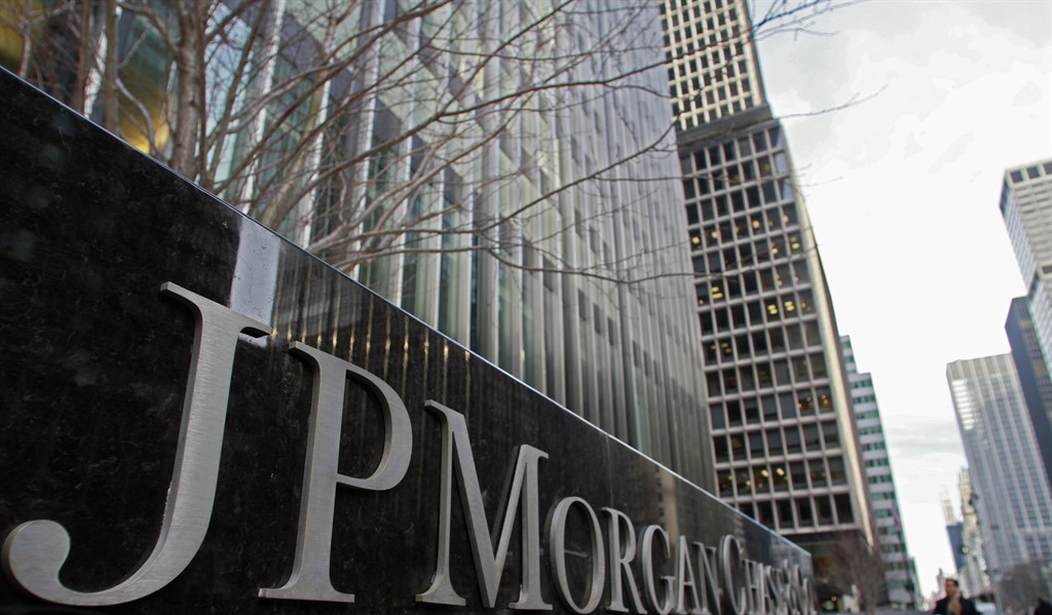
As we noted in this space last spring, the change in administration promised a welcome change in the regulatory winds for gun owners and gun manufacturers. While the Biden administration, and Obama before him, had pretty explicitly enticed major banks to "debank" gun manufacturers - to lock them out of the banking services that any (legitimate) business relies on to do (legal) business, the change in administration set a completely different tone. . And that change is starting to bear fruit.
Last summer, President Trump reset the tone pretty explicitly:
🚨BREAKING🚨⁰⁰@realDonaldTrump signs executive order to “guarantee” fair access to banking for gun owners & the firearm industry. ⁰⁰For years, @BarackObama & @JoeBiden weaponized the term “reputational risk” to de-bank supporters of the Second Amendment. pic.twitter.com/4A4B2CAd7E
— Gun Owners of America (@GunOwners) August 7, 2025
On August 7, 2025, President Trump issued an executive order titled “Guaranteeing Fair Banking for All Americans” (the Order). The Order, described further in an accompanying fact sheet, seeks to remedy what the administration views as significant harm to individuals and businesses stemming from certain alleged discriminatory practices by banking regulators1 (the Agencies) and financial institutions.2 The Order states that these practices have limited access to banking services for certain persons not for “material, measurable, and justifiable risks,” but “on the basis of political or religious beliefs or lawful business activities.”
The Order establishes that it is federal government policy that no person “be denied access to financial services because of their constitutionally or statutorily protected beliefs, affiliations, or political views.” It also calls out allegedly “politicized or unlawful debanking” that adversely affects, either directly or indirectly, those with certain protected beliefs, affiliations, or political views.
And the big banks are starting to respond. Citigroup changed course last summer:
We also will no longer have a specific policy as it relates to firearms. Our U.S. Commercial Firearms Policy was implemented in 2018 and pertained to sale of firearms by our retail clients and partners. The policy was intended to promote the adoption of best sales practices as prudent risk management and didn’t address the manufacturing of firearms. Many retailers have been following these best practices, and we hope communities and lawmakers will continue to seek out ways to prevent the tragic consequences of gun violence.
And this past week, JP Morgan Chase reversed its course as well:
JPMorganChase believes that no one should be denied a bank account or service based on religious or political viewpoint or affiliation, and appreciate the intent of the Fair Access Executive Order. As part of our continual evaluation of our processes, we have made enhancements to our standards to help ensurethey are clear, effective, and aligned with best practices.
Notably, our firm recently removed firmwide restrictions on a number of sectors and activities—
including a restriction we previously maintained on lending to manufacturers of modern sporting rifles
for civilian use.
So - in this change, there is good news, and there is...well, a challenge.
According to Larry Keane of the National Shooting Sports Federation, the banks are doing the right thing...:
While JPMorgan Chase’s shift is welcome, it must also be measurable. That’s why NSSF will applaud the decision and hold onto a “Trust, but verify” attitude. Business decisions should be based on credit worthiness and ability to compete in the marketplace. Banking discrimination against the firearm industry was wrong, and illegal, when President Barack Obama introduced it as Operation Choke Point. It was wrong when it was privatized by banks. It appears to be finally being scrubbed from existence but the proof will be when firearm businesses can demonstrate they can access their financial service needs with these big banks.
...but things that are born from executive orders can die from executive orders. The real change needs to happen in Congress:
A future administration can reverse these gains with an executive order. NSSF continues to push for passage of several bills that, should they become law, would protect against banking discrimination. Those include U.S. Senate Banking Committee Chairman Tim Scott’s (R-S.C.) Financial Integrity and Regulation Management (FIRM) Act, S. 875, which has already passed favorably from the Senate Banking Committee. That bill has a companion in the U.S. House of Representatives, sponsored by U.S. Rep. Andy Barr (R-Ky.), introduced under the same title as H.R. 2702, which has also passed favorably from the House Financial Services Committee.
There are also other NSSF-supported Congressional efforts to codify protections against banking discrimination including the Fair Access to Banking Act, introduced in the Senate by Sen. Kevin Cramer (R-N.D.) as S. 401 and in the House by Rep. Barr (R-Ky.) as H.R. 987, as well as the Firearm Industry Nondiscrimination (FIND) Act, introduced in the House by Rep. Jack Bergman (R-Mich.) as H.R. 45 and the Senate by Sen. Steve Daines (R-Mont.) as S. 137.
So you need to get to work, nagging your congresspeople.