The left has long dismissed "great replacement theory"—the notion that powerful institutions are deliberately working to reduce, supplant, or politically overwhelm the white population in Western countries—as a racist conspiracy theory. Merely raising the idea, they insist, should permanently discredit anyone as a vile racist unworthy of serious consideration.
Lately, however, prominent voices on the left have begun saying the quiet part out loud—not hinting, not dog-whistling, but stating it explicitly.
Take Texas State Representative Gene Wu (D), a leader in the Texas House Democratic Caucus. In a recent podcast interview with journalist Jose Antonio Vargas, Wu said: "The day the Latino, African American, Asian, and other communities realize that they share the same oppressor is the day we start winning because we are the majority in this country now. We have the ability to take over this country and to do what is needed for everyone and to make things fair. But the problem is our communities are divided. They're completely divided."
Rep. Gene Wu (D) goes mask off:
— End Wokeness (@EndWokeness) February 8, 2026
"Non-whites share the same oppressor and we are the majority now. We can take over this country." pic.twitter.com/CrxsPqlkLI
That's not subtle. It's a frank admission of viewing demographic shifts through a lens of racial power struggle, with non-white groups as a unified majority poised to "take over" from an implied oppressor class.
How did we arrive here? How did we move from the 1980s and 1990s—when public sentiment on race relations was broadly positive and optimistic—to a moment where race dominates nearly every major social conflict?
The shift isn't mysterious. It stems from redefinitions of key terms, ideological frameworks, and deliberate political tactics.
For decades, racism had a clear, shared meaning: the belief that race determines fundamental human traits and capacities, producing inherent superiority of one race over others. It was an idea—objectively false and immoral when acted upon. Discrimination, such as refusing to hire someone because of their race, was (and remains) illegal under state and federal law.
Growing up in the 1980s and 1990s as the child of a mixed-race marriage (black father, white mother), I saw this understanding in action. Most people embraced Martin Luther King Jr.'s vision: judge people not by the color of their skin, but by the content of their character. Sure, off-color jokes and schoolyard teasing happened—often about race, weight, height, or anything else—but genuine, sustained racial animosity was rare. People cared who you were, not what you were.
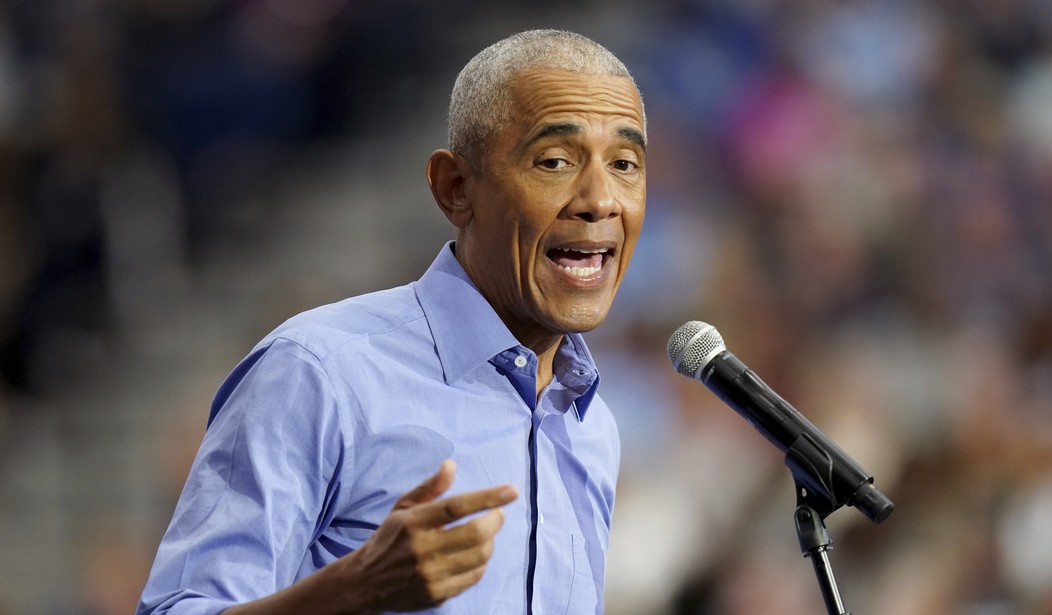
That clarity was deliberately eroded. Barack Obama's 2008 election sparked widespread celebration as a historic milestone and talk of a "post-racial" society. His victory speech captured the hope: "If there is anyone out there who still doubts that America is a place where all things are possible... tonight is your answer."
Instead of fulfillment, we saw relapse. Few in the mainstream initially grasped critical race theory (CRT) or how radically it redefined racism. Under this framework, racism shifted from individual belief or intent to systemic outcomes—disparities and statistics. Racism became something alleged simply by pointing to numbers: too few black employees? Racist. Too few Hispanic graduates? Racist.
Neutrality itself became suspect. Institutions faced pressure to judge and allocate resources explicitly by race, inverting King's color-blind ideal.
This isn't abstract. In Minnesota, legislation on ethnic studies in public schools included language defining "anti-racism" as "actively working to identify and eliminate racism in all its forms so that power and resources are redistributed and shared equitably among racial groups." Redistributing power and resources on racial lines isn't an academic exercise—it's a political one, and by definition, racial discrimination.
What the left brands "anti-racism" is often racism rebranded—Orwellian directional racism applied selectively against white people. It doesn't reject racial thinking; it weaponizes it.
Minnesota House education committee hearings on ethnic studies revealed this in student testimony. Students spoke of learning about "power dynamics," "social justice," "institutional racism," and how critical ethnic studies helped them understand their identity within "race, power, and privilege." One described it as initiating "anti-racism" inside and outside the classroom. Another, as a white male, said ethnic studies taught him he "may not be able to understand" others' experiences—a concept akin to "epistemic injustice" or "ethnic solipsism," what Voddie Baucham called "ethnic gnosticism," where shared ethnicity is prerequisite for understanding.
These are ideological terms, not neutral history lessons. The goal, as one lawmaker noted, appears to produce "resistance" and "activism" rather than productive citizenship. Students are trained to view everything through race—taught to think racially and, ultimately, to discriminate.
No wonder elected officials like Rep. Wu now voice such ideas openly. The groundwork has been laid in classrooms for years. Seeds of resentment and grievance have been planted, watered, and are germinating. What once sat outside the Overton window now fits comfortably within the left's expanded framework.
The irony is stark: those who decry "great replacement" fears as conspiracy now openly discuss demographic majorities "taking over" to "make things fair" by racial solidarity against a shared oppressor. They're not hiding anymore.