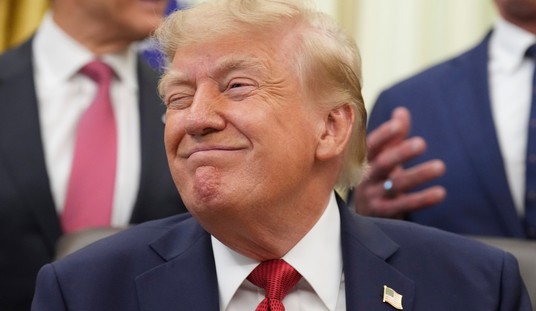
This week at the Minnesota State Capitol, we witnessed a clear pattern of toxic partisanship from Democrats afflicted with severe Trump Derangement Syndrome. Their behavior resembles that of a jealous ex who decides, "If I can't have her, no one can." In political terms, it's "If we're not in full control, you can't have nice things."
With the Minnesota House tied at 67 Republicans and 67 Democrats, neither side can pass legislation without some level of cooperation. This balance forces a fundamental choice: govern collaboratively or obstruct for political gain, stalling in hopes of flipping the chamber in the next election cycle. This past week, Democrats chose the latter—pure, senseless opposition not rooted in policy details, costs, or unintended consequences, but simply because the proposals originated from Republicans and would deliver benefits traceable to President Donald Trump.
Two stark examples illustrate this dynamic.
First, in the House Taxes Committee, Republicans advanced federal tax conformity legislation. This may sound technical, but the concept is straightforward and powerful. Recent federal tax changes (from what's been called the "One Big Beautiful Bill") allow businesses greater deductions for expenses like equipment, research, and investments—such as enhanced Section 179 expensing, bonus depreciation, and immediate expensing of research costs. If Minnesota conforms to these federal provisions, our state's businesses receive the same tax relief, keeping them competitive with out-of-state rivals.
Critically, this conformity costs the state nothing—not a single penny in lost revenue from existing budgets, no new programs, no added spending. It simply lets Minnesota job creators retain more of their own earnings to reinvest in hiring, production, and growth. Economic expansion at zero cost to taxpayers.
Democrats voted no. Their opposition wasn't about fiscal math or budget impacts. It stemmed from "orange man bad"—refusing to let businesses benefit if credit might accrue to Trump.
The same obstruction played out in education policy. Republicans introduced a bill to let Minnesota opt into a federal scholarship tax credit program established under Trump's tax and spending legislation. Here's how it works: Individuals can claim a federal tax credit of up to $1,700 for donations to qualifying nonprofit scholarship-granting organizations (SGOs). These nonprofits award scholarships to students for education expenses like tutoring, transportation, technology, after-school programs, and more—applicable to public, private, or charter schools.
The program is federal but requires states to opt in voluntarily. The Republicans' bill would enable Minnesota to participate. Again, key point: It costs the state nothing—no new spending, no taxes, no obligations. It's voluntary private donations incentivized by federal credits (donors effectively get their money back via reduced federal taxes), bringing fresh funds into Minnesota schools.
Democrats blocked it. Remarkably, Governor Tim Walz could opt Minnesota in unilaterally via executive action—he's wielded such authority freely during the pandemic and on regulatory matters—but he hasn't here. Why? Because the policy ties back to Trump.
Consider a real local impact: In the St. Michael-Albertville School District (roughly 6,700 students, including my two sons, and about 4,000 families), if just 25% of families utilized the $1,700 credit, it could generate around $1.7 million for the district. That's new money for students, programs, and opportunities—not from state coffers, not from property tax hikes, not a levy. Purely voluntary donations backed by federal incentives.
Yet Democrats say no, even as schools face deficits, teachers fear layoffs, and programs get cut. This opportunity for real funding without costing the state a dime is rejected outright.
Opponents mischaracterize the program as a "voucher system" that drains public schools or funnels money to private ones. That's flatly false. It doesn't reduce public school funding, alter formulas, or cut budgets. It injects new private dollars. Claims that it disproportionately benefits private schools assume public-school parents (90% of Minnesotans) would inexplicably donate to unrelated private institutions rather than their own kids' schools—despite $1,700 being far short of private tuition. A true voucher would redirect existing per-pupil public funding (around $15,000 on average); this doesn't shift a cent.
Opponents—whether radical activists, the Minnesota Department of Education, union leaders, or others—either lie knowingly or demonstrate staggering incompetence in basic comprehension. Either way, it's alarming when such figures influence education policy.
Other blue states aren't so shortsighted. Colorado and Connecticut have opted in, despite disliking Trump. They prioritize governing and good ideas over petty politics.
Minnesota Democrats, however, draw a different line: If an idea comes from the "wrong" source or credits the "wrong" party, the answer is no—even when it helps businesses and schools at zero cost.
Politics over people. Obstruction over outcomes. That's the real derangement on display at the Capitol. Minnesotans deserve better.