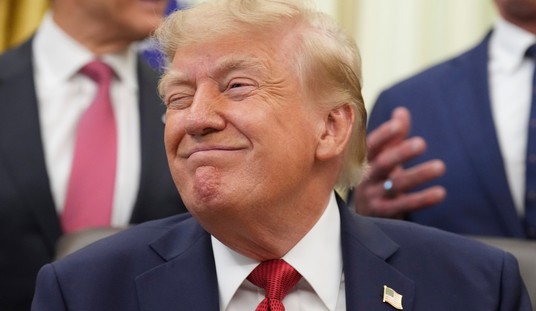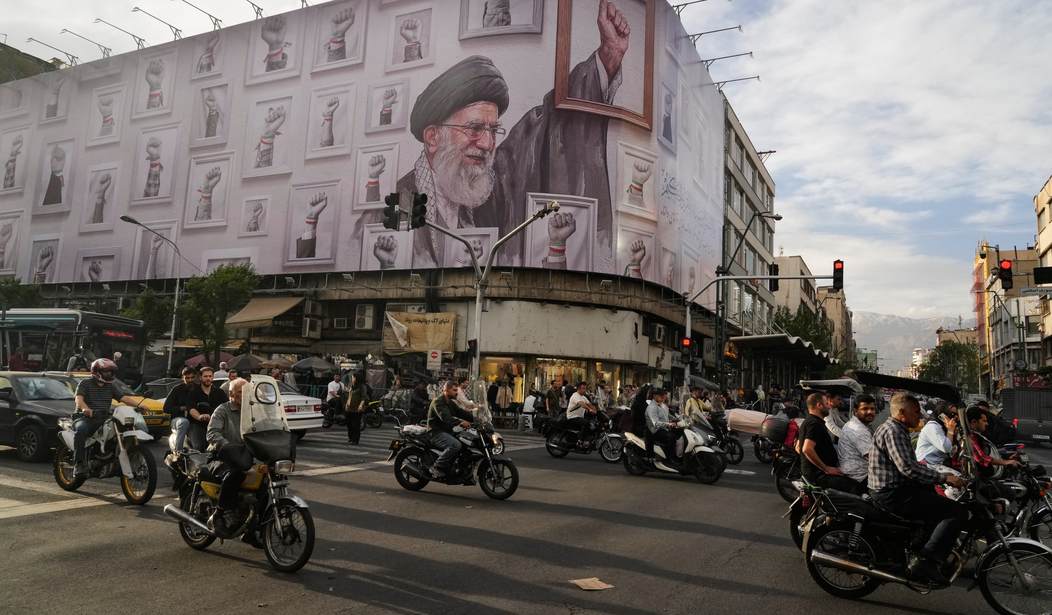
Donald Trump has clearly not been excited about the prospect of returning to kinetic warfare with Iran.
That's not a "panican" talking point; it's an indisputable fact, given that he has chosen not to follow up on any of his numerous threats to the Iranian regime. Many people, including some of his biggest supporters, either openly worry that Trump is flinching or privately whisper that Trump may be in the process of losing the war ever since he declared a cease-fire.
Trump is aware of this, and earlier today took to Truth Social to essentially tell his critics on the right to shut up, because their discomfort isn't helping him in the negotiations.
Trump on his war in Iran: “Just sit back and relax, it will all work out well in the end.” pic.twitter.com/M5E6yPgCAr
— PatriotTakes 🇺🇸 (@patriottakes) June 1, 2026
Of course that's true if there really ARE real negotiations, but a lot of people look at the contrast between Trump's reassurances that Iran is desperate for a deal and the fact that Iran keeps insulting Trump and making him look, apparently, weak. His critics MAY be being unfair, because it's clear from Scott Bessent's more reassuring briefings that Iran truly is suffering badly from the blockade and sanctions, and the reopening of Iran's internet is not a sign of strength, but likely economic weakness caused by the closure. It is difficult to overestimate the integration of modern economies with the internet.
🚨 JUST IN: Sec. Scott Bessent just exposed it, the Gulf nations were HIDING Iranian regime assets and bank accounts...then gave Bessent access when Iran started striking them
— Eric Daugherty (@EricLDaugh) May 31, 2026
Economic assassination!
Iran's former friends TURNED ON THEM!
"A BIG mistake that the Iranians made… pic.twitter.com/RdUofRKRpR
"A BIG mistake that the Iranians made was attacking their GCC neighbors, their neighbors in the Gulf, because we had many very good allies who maybe weren't completely transparent with us on the money, Iranian money that was in their banking systems, all of a sudden became VERY compliant in terms of being willing to turn over accounts or help us freeze block accounts!"
"And then the third part was the incredible blockade. I really think it's the economic blockade of funds and the physical blockade of the ships not going in or out of the Iranian ports."
"Kharg Island is shut down. That's their big oil loading facilities, and that means that they're going to have to start taking down the wells."
But it's not implausible that Iran really has strong enough cards to play through asymmetrical warfare to deter Trump and our Gulf allies. In fact, even if Iran's missile and drone capabilities are significantly degraded, they probably have sufficient striking power to devastate Gulf oil and water production in what would amount to a "nuclear" option without nuclear weapons.
“Iran really wants to make a deal…”
— Bonchie (@bonchieredstate) June 1, 2026
Come on. https://t.co/wmHrfMR4x4
My colleague-once-removed, Bonchie, has been a serious skeptic of Trump's post-cease-fire assurances, while until recently I bought the "Iran is on the brink of economic collapse" argument and thought that Trump really was reserving his military option as a last resort.
I started revising my opinion a few weeks ago, after weeks of what appeared to be Iranian taunting and testing of the cease-fire through random strikes on Kuwait and the UAE.
Iran has concluded that will Trump simply will not back up his repeated threats and redlines.
— Bonchie (@bonchieredstate) June 1, 2026
So they just keep adding provisions and stalling. They don’t want a deal because they see the longterm realignment of power as more valuable.
That reality won’t be wished away.
I have no doubt that if Trump had a year, or perhaps even half that, the Iranian regime would have to give in. The economic pressure is real, as is the damage to Iran's conventional military forces. Trump and Hegseth aren't lying about that.
What's at issue, though, is the relative endurance capabilities of the opposing sides, as it usually is in war. Countries don't give in when it is rational to do so; they do it when it is the only choice, because the other side usually is suffering too. Look at World War I. Germany was, by the end of the war, nearly starving to death, but it retained the hope of victory until after somewhere over 750,000 civilians died of starvation and disease. In the winter of 1916-17, most Germans survived on little else than turnips.
Obviously, the United States will suffer nothing like that, but Iran is betting that its regime will survive with far more suffering in Iran than even the modest amount of pain in the US economy, which threatens Trump's political coalition. It is also betting that the Gulf countries, Europe, and our Asian allies will pressure Trump enough that they can ride out the, they judge, temporary pain in Iran.
Trump, when NBC informed him about the suspension of negotiations by Iran (already an odd sign that Trump didn't get the news first), seemed to brush it off:
The Islamic Revolutionary Guard Corps said in a statement that Iran considers “the crossing of red lines in Lebanon and Gaza to mean direct war and the imposition of costs on its national security and the Islamic Resistance,” according to Tasnim.
In response, Iran will “undertake defensive operations through unconventional measures, opening new fronts and maintaining the Strait of Hormuz equation,” the IRGC said.
President Donald Trump told NBC News he had not been informed of the decision ahead of time but that “I think it’s fine if they’re done talking.”
“It’s an appropriate thing to say, because they’re better negotiators than they are fighters,” he said in a brief phone call. “But they haven’t informed us of that.”
“It doesn’t mean we’re going to go and start dropping bombs all over there,” added Trump, who said Friday he would soon decide on a proposed deal to extend an ostensible ceasefire agreed to in early April. “We’ll keep the blockade.”
He added, “If they don’t want to talk, that’s okay with me. I think it’s fine. I don’t particularly want to talk either. We talk too much.”
This seems at odds with his bellicose talk, and is definitely at odds with his constant insistence that Iran is desperate for a deal.
What will be telling, though, is whether Trump pressures Israel to stop its advance into Lebanon. What Iran is demanding is nothing short of acknowledging Iran's proxy sovereignty over the country. It defines the battle between Israel and Hezbollah as a "front" in the Iran war, which, if Lebanon were a sovereign country, would be an absurd condition.
Iran is demanding that its regional power be officially recognized, and if Trump attempts to do that, it would be hard to argue that Trump has the upper hand. It would permanently establish that not only is Iran's sovereignty legitimately a concern for the IRGC and Iran's government, but its power to operate as it likes within the region will go unchallenged.
It could hold every country in the region and the world economy hostage whenever it is displeased.
Perhaps Trump believes that Iran's pulling out of the talks is a Hail Mary, and the regime is on the verge of collapse. After all, he knows more than we do. But from the outside looking in, more and more people are getting the message that Trump has really painted himself into a corner. Pressuring Israel into a cease-fire would almost confirm that.
Iran, though, may be signaling that they are bluffing. Hezbollah is indicating that they may want a cease-fire, allowing Iran to save face if it chooses to return to the table:
The speaker of the Lebanese parliament, Nabih Berri, told the Trump administration on Sunday that Hezbollah is ready for a full and immediate ceasefire with Israel and pledged to guarantee its implementation, Berri's top adviser Ali Hamdan told Axios. ...
Berri is one of the most powerful Shia politicians in Lebanon and has close links to Hezbollah, though U.S. and Israeli officials question whether he can actually guarantee Hezbollah's compliance.
If Hezbollah is indeed ready for a full ceasefire, such a truce would leave the Israeli occupation of southern Lebanon in place for now while potentially disconnecting the Lebanese arena from the war with Iran.
According to a source with knowledge, though, U.S. officials told Berri they don't think Netanyahu would agree.
An Israeli official confirmed Hezbollah expressed readiness for a full ceasefire without demanding an immediate Israeli withdrawal. The State Department didn't immediately respond to requests for comment.
Or that, too, could be a bluff, with Hezbollah just wanting breathing room. They aren't known for respecting cease-fires. What we do know is that Trump is seizing on the "offer" to get Israel to back off, at least somewhat, after the administration had signaled it was ready to give the go-ahead for an Israeli full assault.
NOW: President Trump says Israel will not be sending ground forces into Beirut and claims Hezbollah will stop its attacks on Israel. pic.twitter.com/cTKwJKfp82
— Aviva Klompas (@AvivaKlompas) June 1, 2026
Capitulation? Or smart negotiating?
Trump is now fighting a war on three fronts, each with its own timelines. The first is with Iran, and the true balance of terror between US military power to destroy Iran's vital infrastructure and Iran's ability to destroy the Gulf's oil infrastructure and desalination plants; the second is world tolerance for economic pain, which will likely escalate over time; and the third is domestic tolerance for a war that never was popular.
Iran's war is less complicated. In most ways, they are much weaker militarily, but likely not where it counts the most: the ability to inflict economic pain on its neighbors and the world.
While we are on the outside reading tea leaves, Trump has to worry that he is signaling weakness to his base as well as everybody else. Most of his supporters want Trump to finish the job, and his Truth Social post shows he knows that.
Trump will have to show some progress soon, or a willingness to punish Iran more for its posturing, or his key pillar of support in the country could erode even more. All that "chirping" Trump is talking about is real, and it is not insignificant to Trump's ability to maneuver.
This looks like a form of political rather than military chicken, and in that sense, the Iranians may have the advantage as a military tyranny rather than a representative republic.
Yep.
Editor's Note: Do you enjoy HotAir's conservative reporting that takes on the radical left and woke media? Support our work so that we can continue to bring you the truth.
Join HotAir VIP and use promo code FIGHT to receive 60% off your membership.