Russian parliamentary elections took place over the weekend (Friday through Sunday). These were the first elections since the 2022 invasion of Ukraine. Heading into these elections no surprises were expected.
The system of power in Russia is often referred to as "managed democracy" (where the Kremlin does the managing).
That means huge powers for the president and few political surprises.
This weekend's election is set to deliver another parliament dominated by the party of power, United Russia, and a house of MPs fiercely loyal to Vladimir Putin.
Of course there is opposition to the war. Nearly a million Russians have left the country since it started. Many more opponents remain in Russia but expressing opposition to the war publicly is illegal so it doesn't generate much news. In the lead up to these elections, only one party was opposed to the war and it didn't last long.
One such party - Yabloko - is calling for a ceasefire in Ukraine. Back in July it was the only anti-war party in Russia to be registered for the election. Twelve days later, though, the Supreme Court removed it from the ballot. That was widely interpreted as a sign of Kremlin concern that anti-war messaging could strike a chord with Russian voters.
Despite Yabloko's exclusion from the party list, some of its candidates are still running in individual constituency races. Though in recent weeks growing numbers of Yabloko candidates have been detained by police, prosecuted for various offences and barred from the election.
"The police are carrying out a political order. That's no secret," Yabloko candidate Grigory Grishin tells me.
"This way, the authorities are setting the boundaries within which they believe the elections should take place.
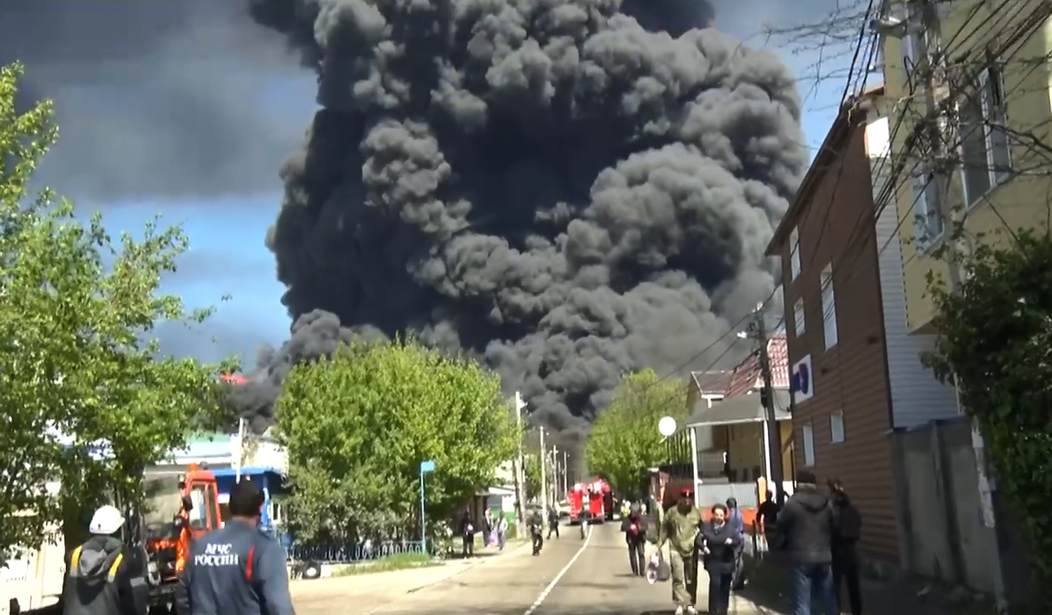
But there was one surprise on the final day of elections (Sunday). A huge wave of Ukrainian drones attacked sites in and around Moscow. A large refinery in Moscow was hit and set on fire.
As the first parliamentary elections in Russia since the 2022 invasion of Ukraine delivered a scripted victory on Sunday to Vladimir Putin, Ukraine pummeled the Moscow region with drones and missiles, hitting a key oil refinery and showing that winning the war remains out of reach for the Russian leader.
The Ukrainian air attack, one of its largest on Russia’s capital area, killed at least three people, local officials said, and damaged the refinery in Kapotnya, on Moscow’s southeastern edge, which supplies a large share of the city’s fuel, including for diesel and aviation. Videos on social media showed it on fire...
The refinery in Kapotnya has been hit several times, and the Moscow region has experienced intermittent fuel shortages in the aftermath of each attack. On Monday, lines formed again at gas stations, which began rationing supplies.
There is plenty of video:
🔥🛢️BREAKING: A large-scale drone attack targeted Moscow and the Moscow region overnight, on the final day of Russia’s parliamentary elections.
— Special Kherson Cat 🐈🇺🇦 (@bayraktar_1love) September 20, 2026
One of the most notable targets was the Moscow Oil Refinery in Kapotnya, where a major fire is visible this morning.
The refinery has… pic.twitter.com/YwdDLS0gy5
One of the most notable targets was the Moscow Oil Refinery in Kapotnya, where a major fire is visible this morning.
The refinery has a processing capacity of around 12 million tonnes of oil per year.
It was last heavily struck on June 16 and 18, when both of its main crude-processing units were damaged and the refinery was forced to shut down.
By August, it had reportedly managed to restart at only around one-third of capacity.
Now it has been hit again.
A close-up view filmed by a local resident of the fire at the Moscow Oil Refinery in Kapotnya following today’s attack. pic.twitter.com/1UnQeuCCDc
— Special Kherson Cat 🐈🇺🇦 (@bayraktar_1love) September 20, 2026
Moscow claimed to have shot down hundreds of drones but clearly a number of them got through including this one.
⚡️ Moscow has faced its largest-ever drone attack: a refinery in Kapotnya is on fire, drones hit residential buildings, and there are fatalities
— NEXTA (@nexta_tv) September 20, 2026
Mayor Sergei Sobyanin claimed that Russian air defenses had intercepted more than 1,600 drones “at all lines of defense,” including… pic.twitter.com/KKwijTYbHB
Another got stopped by a construction crane.
Damn you, cranes!😡
— Special Kherson Cat 🐈🇺🇦 (@bayraktar_1love) June 18, 2026
P.S: But there’s also a nice view on the Bars cruise missile flying overhead at the end. https://t.co/hrys1mQZFF pic.twitter.com/SrfqIUPvDC
The result of this attack was that all of the gasoline refining at this site has been temporarily shut down (again).
Sources told Reuters on Monday that both of the refinery's crude oil distillation units caught fire after drones crashed onto the facility, and that repairs and the resumption of operations could take several weeks...
The Moscow Oil Refinery is one of Russia's largest oil refining facilities, located in Moscow's Kapotnya district. It has a refining capacity of 11 million tonnes of oil per year. The refinery supplies about 40% of Moscow's fuel market and 70% of the Moscow region's demand for petrol and aviation gas.
Gas was already scarce in many parts of the country.
The country is already facing widespread fuel shortages because of Ukraine’s attacks on refineries. While fuel lines have become commonplace in the last few months, there were few on Saturday because not many fuel stations had any gas to sell. When they did, it was low-quality gas or diesel.
The most immediate result of the strike on Sunday is that Gazprom Neft stations have cut the maximum fuel limit from 60 liters to 30 liters. That works out to just shy of eight gallons per transaction.
Customers are now allowed to purchase no more than 30 liters of gasoline per refueling, down from the previous limit of 60 liters.
The move comes after Ukraine launched a drone strike on the Moscow Oil Refinery in the Kapotnya district overnight, causing a fire at the facility.
Finally, there's one more bit of pressure ramping up on Russia's economy and this one is coming from President Trump. A bill he signed into law on Friday gives him the ability to put major sanctions on countries that continue to buy Russian oil.
US President Donald Trump has signed a sweeping sanctions bill, taking aim at Russia's economy by punishing major purchasers of its oil and gas.
The bill, passed by the US House of Representatives earlier this week, gives Trump broad powers to levy tariffs of up to 100% on the top five purchasers of Russian oil and gas – most significantly China and India...
Additionally, the bill includes sanctions against Russian President Vladimir Putin, senior figures within the Russian government as well as banks and other financial institutions and Russia's "shadow fleet" of tankers used to circumvent existing sanctions...
Data from the Centre for Research on Energy and Clean Air, or CREA, shows that China accounted for 50% of Russian crude exports between December 2022 and August 2026, followed by India at 37%.
Russia is threatening that the sanctions could extend the war.
Russia has suggested that sweeping new U.S. legislation aimed at pressuring Moscow to end the war in Ukraine will backfire, warning that new U.S. sanctions would risk undoing President Trump’s steps toward peace.
Moscow most likely hopes that the president, who signed the bill on Friday at the White House, will rebuff the hawks in Congress and sidestep the law’s harsh provisions...
The new law angered some of Russia’s hawks. Dmitri A. Medvedev, the former president and the deputy chairman of the Russian Security Council, who is known for bombastic statements that often diverge from the Kremlin’s, called the new law a “Russophobic abomination” in a message on Saturday on Telegram. Moscow should respond with “the language of direct military deterrence,” he said.
We'll have to wait to see what Trump decides to do with this new capability.
Editor's Note: Do you enjoy HotAir's conservative reporting that takes on the radical Left and woke media? Support our work so that we can continue to bring you the truth.
Join HotAir VIP and use promo code FIGHT to receive 60% off your membership.








Join the conversation as a VIP Member