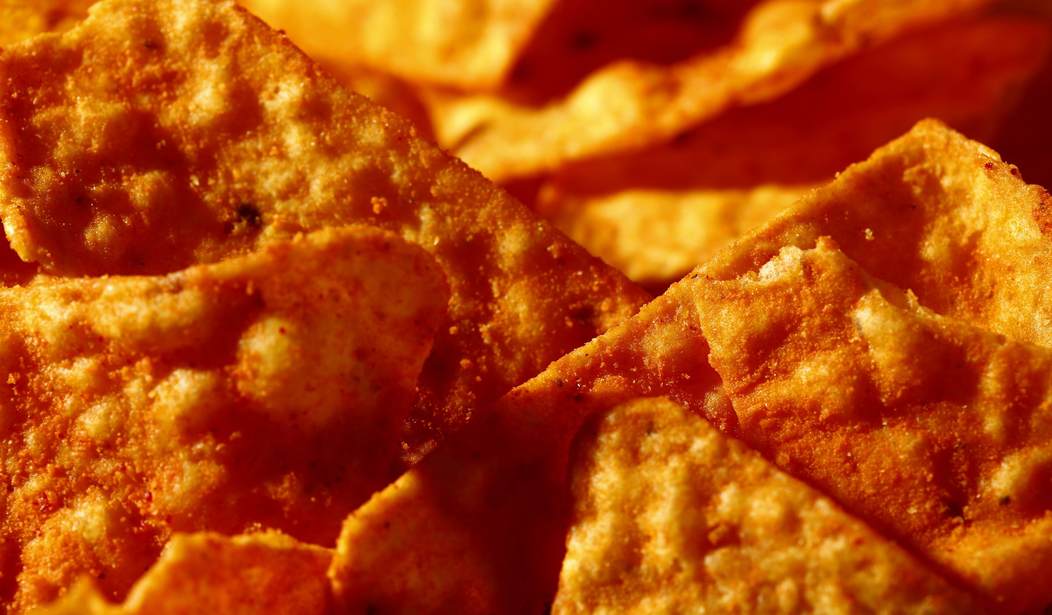
Remember "Shrinkflation?"
It was a term former President Biden coined to try to shift the blame for the inevitable consequences of pouring money into a slow economy - inflation - to someone else, in this case "corporate greed". Instead of raising the price for something, companies would sell less of that thing for the same price.
They tried to make it a campaign issue:
During his State of the Union address, President Joe Biden calls on Congress to crack down on "shrinkflation":
— PBS News (@NewsHour) March 8, 2024
"The snack companies think you won't notice if they change the size of the bag and put a hell of a lot fewer ... chips in it." pic.twitter.com/olsxl8uofb
He focused on...snack chips. And with some people, at least, the idea stuck.
Shrinkflation is real... and it is getting worse.
— Matthew Camenzuli (@Matt_Camenzuli) February 12, 2026
I count about 7 whole chips in this snack sized packet of Doritos.
How do they sleep at night? pic.twitter.com/0feJDLFGbp
Fact is, inflation is still a thing. Not like it was five years ago, but there's still a lot of extra money floating around the economy without enough activity to put it to use.
Problem is, a lot of money - and the regulation that goes with it - is coming from the government. Meaning from you. It is - or was, at one point - Economics 101; if you add more money but don't add more stuff to buy - houses, cars, tortilla chips - prices rise.
And when you take all that money away, what happens?
Health and Human Services Secretary Robert F "RFK" Kennedy induced about a third of the states to ban the use of Supplemental Nutrition Assistance Program (SNAP) benefits to buy pop, candy and processed snack food - AKA "junk food".
And a funny thing happened:
PepsiCo spent $2.8 million last year lobbying to keep junk food eligible for food stamps.
— James Hickman (@thesovereignman) February 11, 2026
Then RFK got 18 states to ban SNAP purchases of soda, candy, and processed snacks. Within a week, PepsiCo cut Doritos, Lay's, and Tostitos prices by up to 15%.
The CEO blamed…
Big Junkfood wasn't happy losing out on all that indirect government money at the cash register:
PepsiCo spent $2.8 million last year lobbying to keep junk food eligible for food stamps.
But the results were predictable to the point of inevitable, once the cutoff went into effect:
Then RFK got 18 states to ban SNAP purchases of soda, candy, and processed snacks. Within a week, PepsiCo cut Doritos, Lay's, and Tostitos prices by up to 15%.The CEO blamed "affordability."
But the timing tells the real story...The moment the government stopped subsidizing demand, PepsiCo had to compete on price. No regulation. No price caps. No antitrust probe. The subsidy disappeared, and the market corrected overnight.
Now - spread this out across all the sectors where government regulation is a driving force in prices.
The nationwide average for regular gas is at its lowest level in 1,681 days — and trending lower. According to GasBuddy, average gas prices have dipped below $3 per gallon in 37 states, below $2.75 per gallon in 22 states, and below $2.50 per gallon in five states.
In fact, Americans can even find gas below $2 per gallon at some stations in at least four states — with prices as low as $1.69 per gallon in Colorado...It’s part of an emerging trend of strong economic news, backed up by data. In just the past week, Americans saw the national median rent fall for the fourth straight month, weekly jobless claims plummet to a three-year low, mortgage rates near their lowest level in a year, and consumer sentiment spike.
Now - apply this to healthcare, education, housing and every other product or service with an inelastic supply, a steady demand, and lots of government regulation and spending, and what do you get?
I don't want to keep seeing the same hands, here.