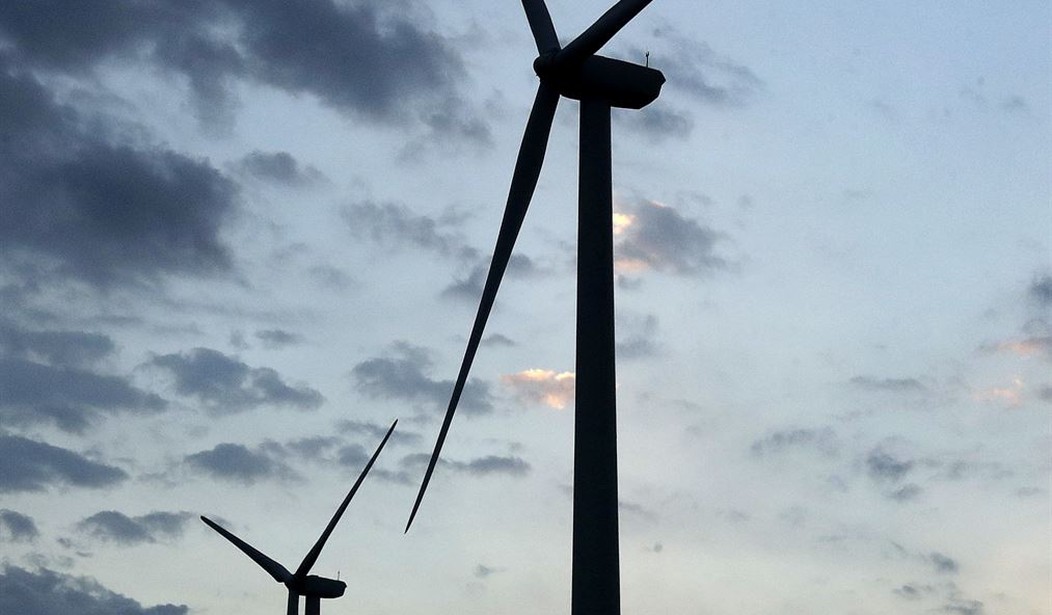
I wanted to give you all a quick update on the offshore wind farm that's been nothing but trouble since its inception - Vineyard Wind, off the Nantucket coast.
In the middle of April came word that one of the two partners in the project, GE Renewables, a subsidiary of GE Vernova (which made the infamous blades used in the project), had declared itself no longer a player. It was walking away.
This caused much angst amongst everyone, especially the Vineyard Wind development (with its offshore parents, Iberola and Copenhagen Infrastructure Partners), which declared the nearly complete $4.5 billion (with a 'B') project could not be finished without GE Renewables full participation. They filed a lawsuit to force GE into honoring the contract.
Within 24 hours, Vineyard Wind had a ruling from a Suffolk Superior court judge telling GE they could not walk away, and to get back to work, calling the GE complaints 'fanciful,'
A Suffolk Superior Court judge has ruled that GE Renewables cannot abandon its work on the Vineyard Wind offshore wind farm south of Martha's Vineyard, saying the company has no legal basis to quit and that its departure now would cause "immeasurable" harm.
In a decision issued April 17, Judge Peter Krupp granted Vineyard Wind's emergency request for a preliminary injunction and temporary restraining order, barring GE from terminating its contracts and requiring the company to keep performing its work.
The five-page ruling prevents GE from acting on its Feb. 27 termination notice, which had set an April 28 end date for its turbine supply and service agreements. It also prohibits GE from slowing or altering its work based on the dispute. The court did not require Vineyard Wind to post a bond — a step sometimes imposed in injunction cases — signaling the judge's confidence in the developer's position.
As of yesterday, the Massachusetts judge has agreed to rehear the case because the wind farm is now supposedly 'operational,' which completely negates Vineyard Wind's arguments against GE Renewables' exit.
A judge has agreed to reconsider a temporary injunction he issued last month that prevented turbine supplier GE Renewables from walking away from Vineyard Wind.
Suffolk Superior Court Judge Peter Krupp issued the injunction April 17.
GE filed for reconsideration, arguing that circumstances have changed. The company contends that Vineyard Wind is now commercially operational and will not suffer irreparable harm without GE.
“Either the Project was, in fact, capable of commercial operation at the time of the preliminary injunction hearing or it became so within days, without any material change in underlying conditions,” attorneys for GE wrote in a court filing. “In either case, VW's irreparable harm showing collapses.”
What makes this tit for tat argument interesting are the details. What, exactly, is 'operational' in a wind farm?
According to Vineyard Wind, they still need GE around because they're only partially operational, which sounds kind of like being only 'mostly dead.'
Attorney Michael Scheinkman, speaking for Vineyard Wind, told the judge that the wind farm needs more work from GE to reach its full capacity.
“This is an 806-megawatt project that's generating output at less than half of that, which is not sufficient to generate commercially viable levels of electricity,” he said. “GE's work is necessary to do that.”
Well, 'Hey, dude,' said the GE lawyers. 'We're not the ones who said you were up and running. You did that your ownselves.'
How awkward.
...To counter that, GE pointed to an April 29 earnings call, in which Iberdrola, one of Vineyard Wind’s parent companies, said the wind farm has reached commercial operation.
“I think from the — if I'm not wrong, from the 24th of April, it's in commercial operation,” Ignacio Galán, executive chairman of Iberdrola, said on a recording of the call posted in the Iberdrola website.
“C.O.D. [commercial operation date] was declared,” added Iberdrola CEO Pedro Azagra.
That's where the court case stands, and the judge will have them all in on the 12th.
What's a wind farm running at half of its projected capacity mean in real life?
The things you learn in this job.
First, you have to look at the massive GE Haliade-X blades they put on the VW turbines. They are the whole show for all the flashy megawatt numbers.
...At Vineyard Wind, the partially constructed wind farm about 15 miles south of Martha’s Vineyard, one turbine can put out between zero and 13 megawatts (its nameplate capacity), depending on wind conditions.
The rated wind speed for the project’s GE Vernova Haliade-X blade model is 11 meters per second, which equates to about 25 miles per hour. The turbine will not produce the full 13 megawatts unless the wind is 25 miles per hour or greater. If the wind is weaker, say 15 miles per hour, it will put out fewer megawatts. If the winds are too weak, it won’t produce power. If the winds are too strong, the turbine will shut down to prevent damage.
A turbine doesn't begin producing electricity until the wind speeds hit at least six mph - that's known as the 'cut-in' speed. Conversely, when it has to shut off, that's the 'cut-out.'
...When you see the blades spinning, the turbines do not engage the generator to produce power until 6 miles per hour. After 6 mph, they start generating, and they don't produce full power until around 23 miles per hour. In other words, a 13 megawatt wind at around 12 miles per hour may only produce half its power. Additionally, the turbines are automatically shut down during storms due to high winds or shifting winds.
The average wind speed off Massachusetts is around 20 miles per hour.
So the average windspeed off the Nantucket coastline is never enough to bring these things up to full nameplate capacity to begin with.
Huh.
You also have to understand that these turbines, however huge, never do produce 'nameplate capacity,' not even close.
The most efficient source of energy is a nuclear reactor. It's all downhill from there. Offshore wind averages about 40% of its nameplate capacity.
...But suggesting it’ll generate 806 megawatts when finished is “not that accurate,” Stewart continued. That’s because 806 megawatts is the output with a 100% capacity factor.
In other words, the homes-powered estimate is linked to actual output, which developers don’t include in their press releases. For Vineyard Wind, a 50% capacity factor means that about 400 megawatts of actual output would power its estimate of 400,000 Massachusetts homes on average over the course of a year.
Nuclear power plants have the highest capacity factor of any energy source: 90% or more. Last year natural gas in the U.S. had a capacity factor ranging from 20% to 59%, depending on the type of plant, while coal-powered plants sat at about 42%, according to federal data. The capacity factor for offshore wind can range from the 40s to 50s, and is typically higher than that of land-based wind farms, which had a capacity factor of about 34% last year.
There are a lot of variables here already, right, even before the wind blows or it doesn't. A lot of moving parts have to move constantly and correctly to get to the promised outcome.
But a wind farm running at 'half capacity' when it really only generates 40% of its nameplate capacity under the best of circumstances doesn't sound like there's much happening in the way of power generation out there in the waves at all, does it?
Now, I'm no #mathz prodigy - I don't even play one here at HotAir - but to me it adds up to somebody taking a bath financially...I'm pretty sure.
Which leads to the next issue with this project - one of those earnest promises about renewables was the 'affordability' of this 'cheaper energy.'
Vineyard Wind officially switched on its power generation on the first of this month, which stabilized the rates and locked in the contract with the state and the ISO.
Is it going to be 'saving money' for consumers any time soon?
[INSERT: industry argle-bargle]
...Vineyard Wind’s energy sales] dropped nearly 13% in the first quarter of 2026 (January through March) compared to the last quarter of 2025 (October through December), according to new data from the Federal Energy Regulatory Commission. Wind turbines usually generate the most power in winter, when winds are strongest. But this winter, the project still had turbines to commission and bring fully online.
Output can vary on a given day or hour depending on wind speeds, repair work or other offshore conditions.
Vineyard Wind in a statement Monday said the power purchase agreement activation marks a significant milestone, but did not answer other questions, including about the status of the tripping turbines and the drop in energy production in winter.
According to the wind farm operator in court in their lawsuit against GE Renewables, it will never pay for itself over the - God willing - 20-year life of the project.
It will never come close.
Nonetheless, there are still silly cultists chanting the mantra, as yet another renewable boondoggle plays out in public.
I present Senator Sheldon Whites Only in the House as he receives an education.
How many times must I post this. Vineyard wind cost 4.5 Billion dollars. The expected payback is 1.2 Billion over 20 years, if they last that long. That's a loss of 3.3 Billion dollars on top of the higher costs to subsidize this bullshit.
— Beijing Biden (@BeijingBiden9) May 6, 2026
For what reason are US taxpayers and utility consumers being forced to now take nearly a $3.3 B loss?
EXTREME DOLLAR & ENVIRONMENTAL COST/NO BENEFIT
— Bill Heller (@noturbine) May 6, 2026
Claims offshore wind combats climate change are lies. Vineyard Wind's Final Environmental Impact Statement concludes: “...it is anticipated there will be NO collective impact on global warming as a result of offshore wind projects.” pic.twitter.com/q3Mu2xMNBK
...Vineyard Wind's Final Environmental Impact Statement concludes: “...it is anticipated there will be NO collective impact on global warming as a result of offshore wind projects.”
It's a shame the same couldn't be said for consumers' wallets, the national budget, the ocean, or sea creatures in it.
Editor’s Note: Every single day, here at HotAir, we will stand up and FIGHT, FIGHT, FIGHT against the radical Left and deliver the conservative reporting our readers deserve.
Help us continue to tell the truth about the Trump administration and its successes. Join HotAir VIP and use promo code FIGHT to receive 60% off your membership.












Join the conversation as a VIP Member